Some visits to Champagne are booked months ahead, with a careful plan and a full itinerary. Ours began with a single message on Instagram.
Table of contents
- A label I had seen before
- Two families, one cellar
- Meeting Rémy
- Down in the cellar
- Why Bouzy is known for Pinot Noir
- Bouzy Rouge, the local red
- The tasting
- What we brought home
- Final thoughts
A label I had seen before
A few weeks before our trip to the Champagne region, Rémy Hutasse wrote to us. He invited us to visit his family’s Champagne house in Bouzy, one of the region’s Grand Cru villages. We were already heading to France, so we happily said yes.
At that point we thought we were about to meet a house we had never encountered before. A few minutes later, scrolling back through old photos on my phone, I realised we had already drunk one of their Champagnes nearly a year earlier.
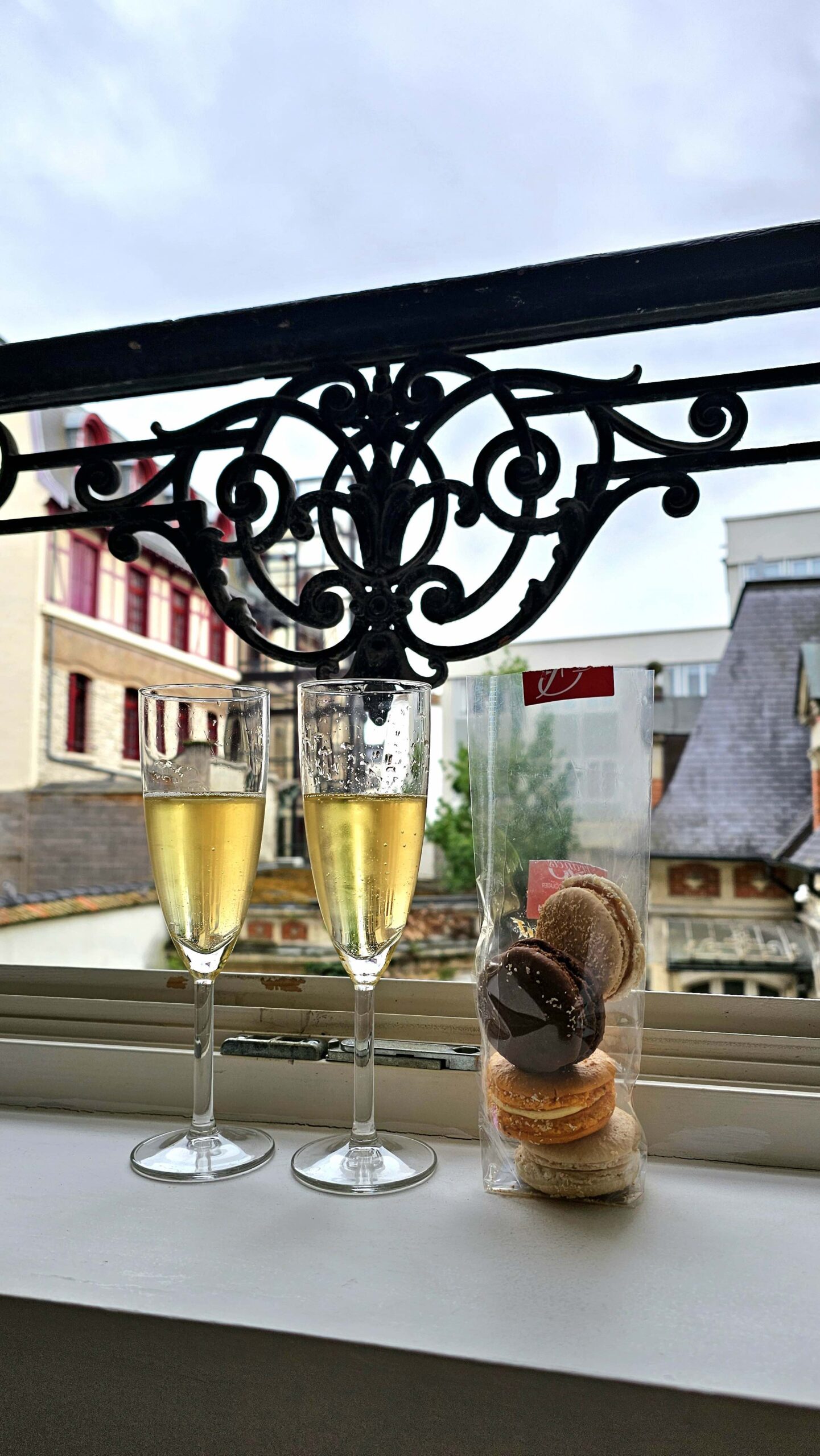
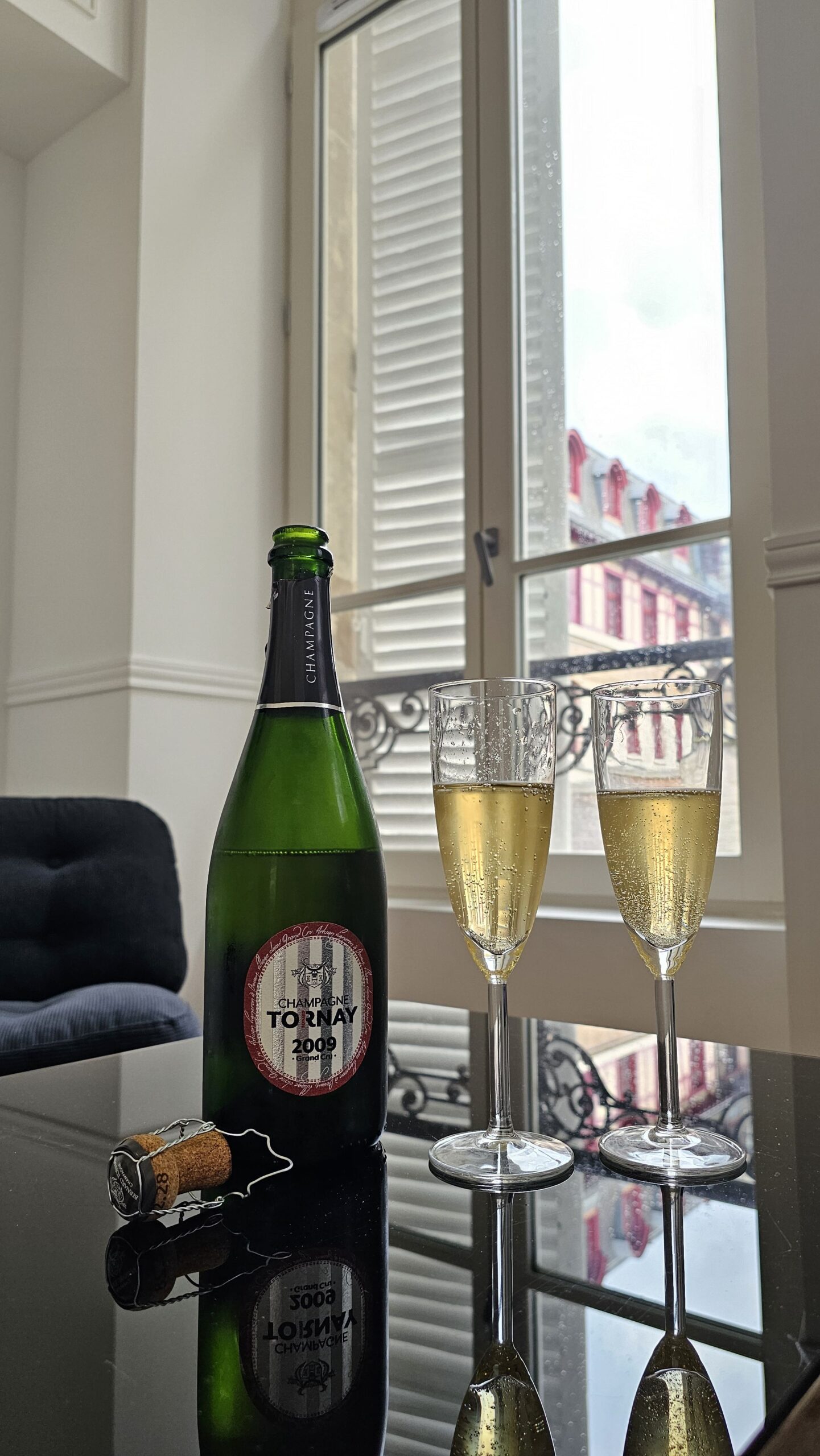
The name stayed with me after Rémy’s invitation, familiar in a way I could not place at first. Going back through old photos from our earlier stay in Reims, I found why: a picture taken almost a year before, on the table of our Airbnb. A bottle of Champagne Tornay Millésime 2009 Grand Cru, a small box of macarons beside it, two glasses poured for another slow evening in Champagne.
One label, and the whole evening came back. Knowing we would soon stand inside the house that made it gave the trip a different weight before we had even set off.
Two families, one cellar
Bouzy sits in the heart of the Montagne de Reims and is rated 100% Grand Cru, known above all for Pinot Noir and for its still red wine. Champagne Tornay-Hutasse has grown here across five generations, and the way the estate is run today tells you something about how it came together.
Nathalie Tornay-Hutasse is the fifth generation of the Tornay family. She took over the estate her family founded in the early nineteenth century. In 1997 she married Rudy Hutasse, and the vineyards of Fernand Hutasse joined those of Bernard Tornay, which brought two family holdings and two winemaking styles under one roof.
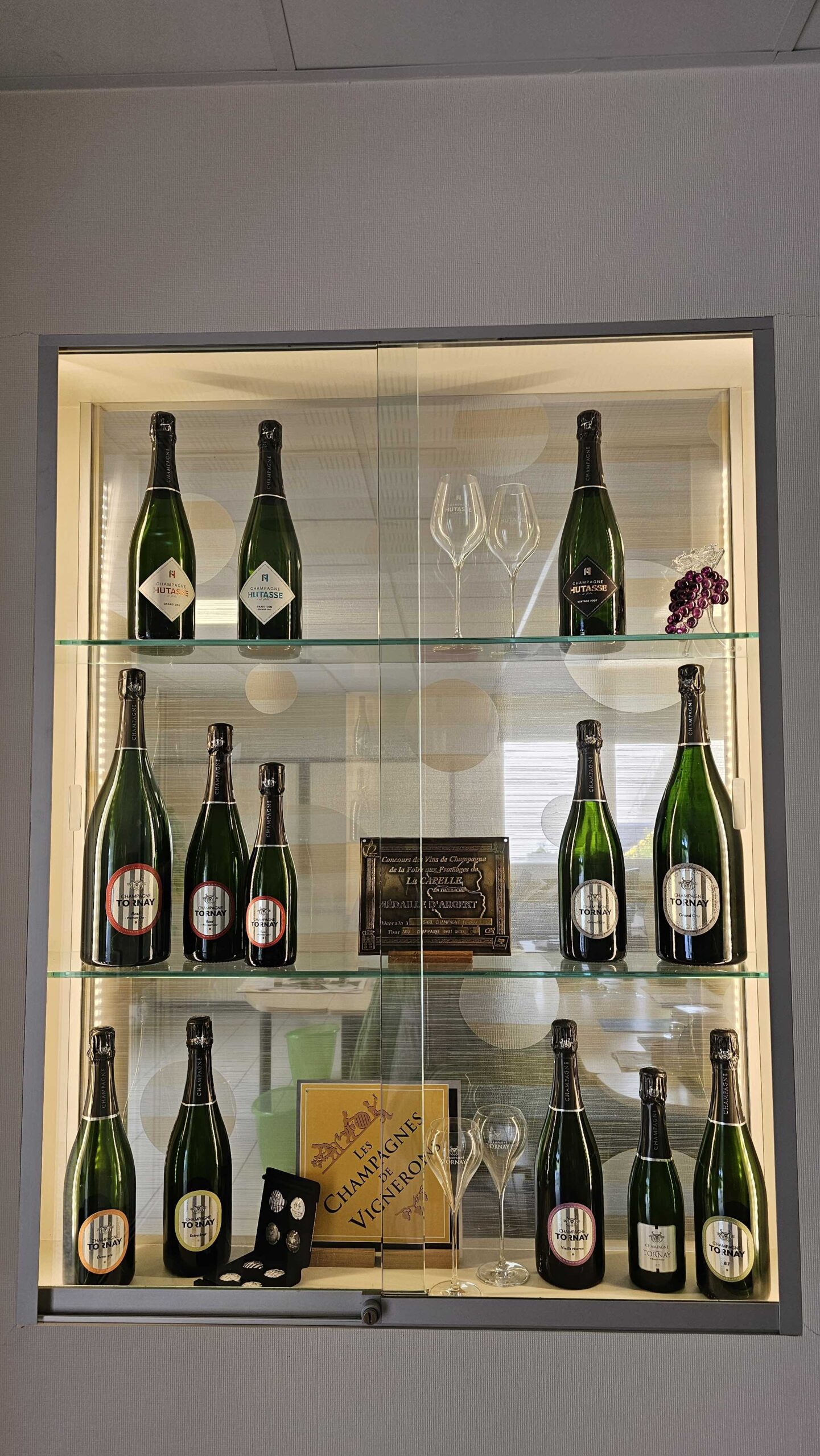
You can still taste that history in the way the range is split. The house keeps two distinct cellars. Nathalie makes the Champagne Tornay cuvées, elegant and built for freshness. Rudy makes the Champagne Fernand Hutasse & Fils cuvées, where the focus turns to older vintages and rarer bottles held back for years. Together the family works more than twenty hectares across some of the best Premier Cru and Grand Cru terroirs in Champagne, blending mostly Pinot Noir and Chardonnay.
This is the sort of place larger names cannot copy. Instead of a visitor centre and a fixed script, you get one family, two cellars, and the reason behind every bottle explained by the people who made it.
Meeting Rémy
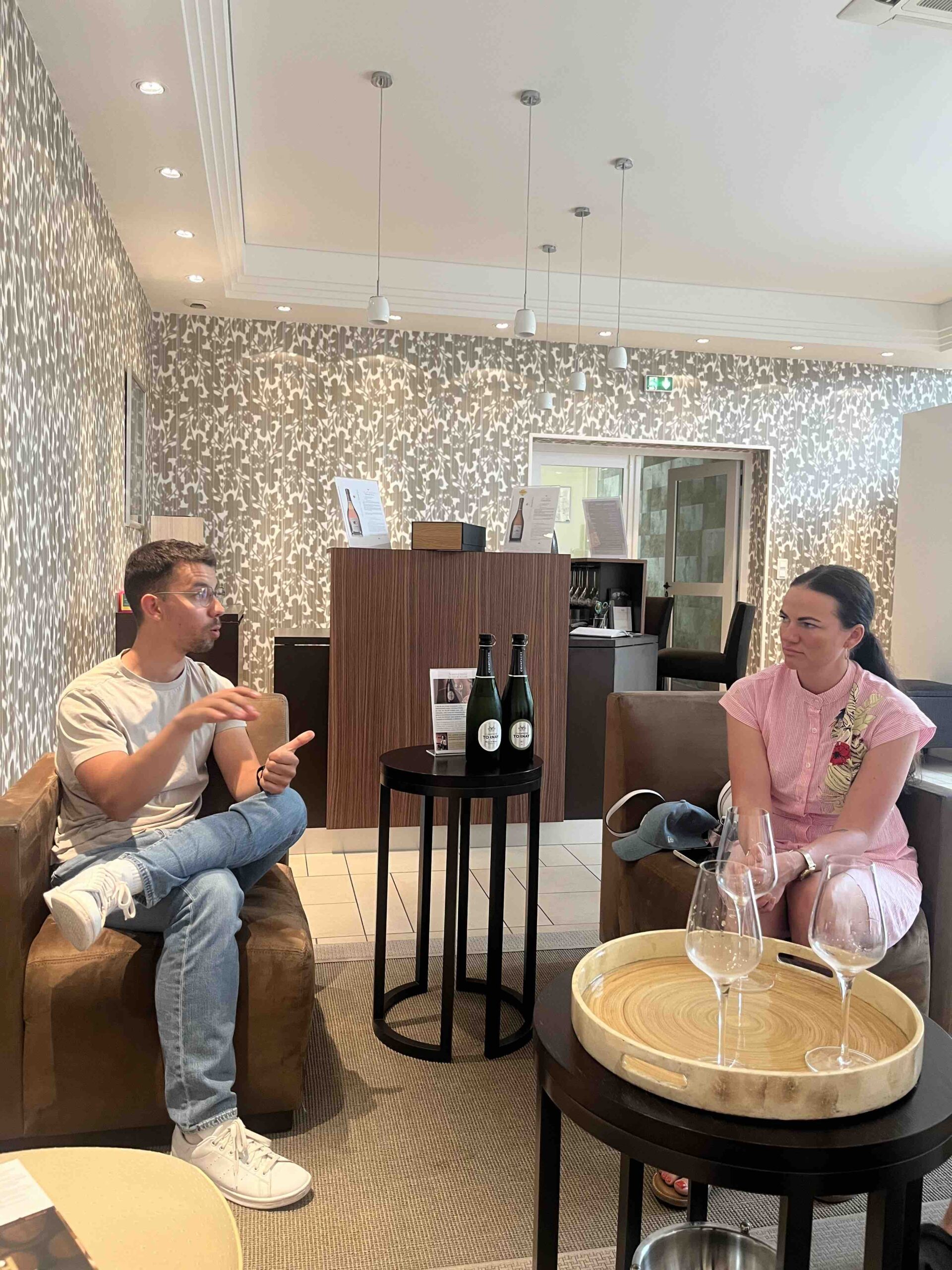
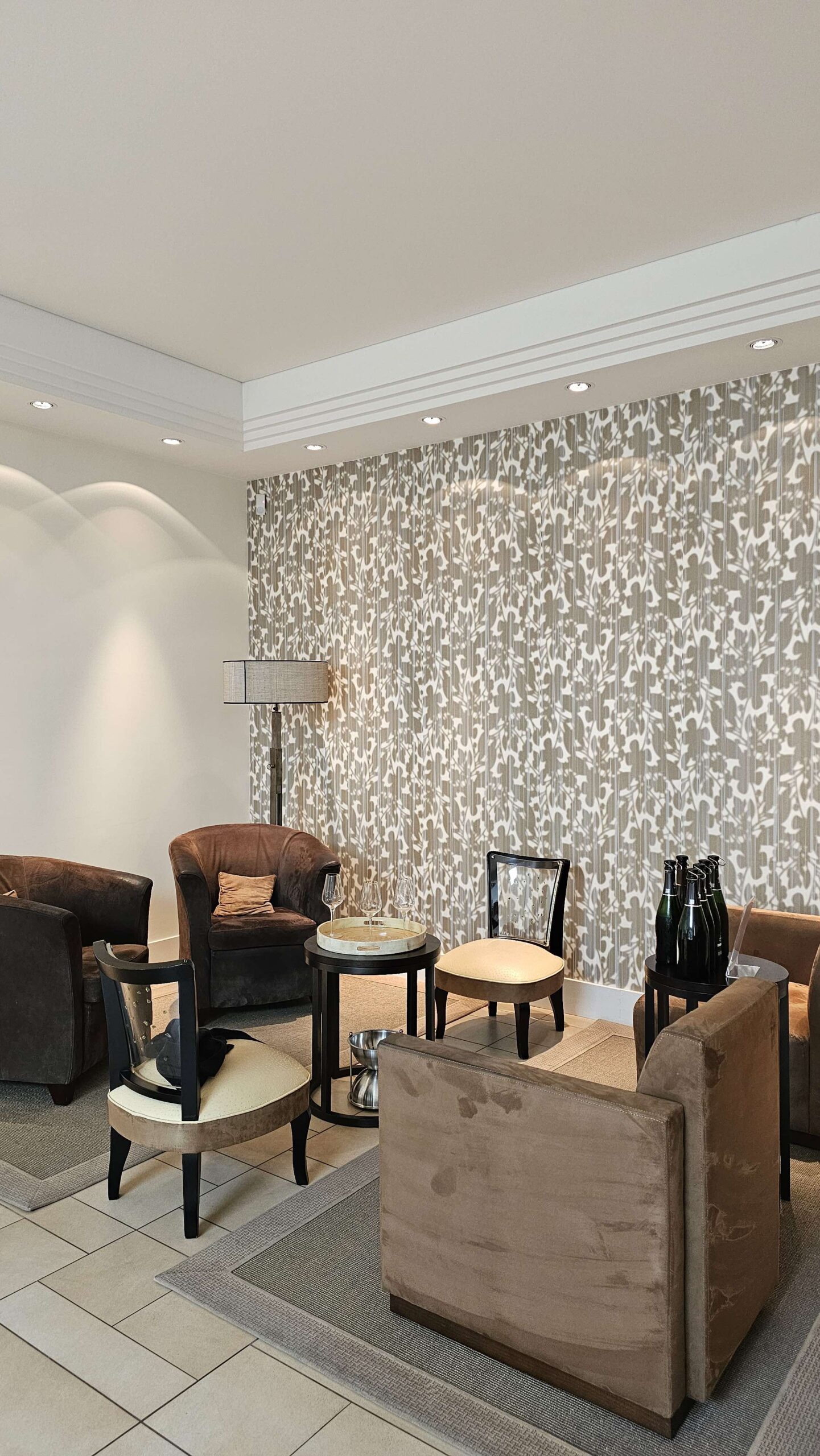
Rémy enjoys introducing people to the family’s work, and that came through from the first message. Meeting him in person only confirmed it. As we walked through the estate he explained how each Champagne was built, talked about how the family thinks about blending, and answered every question we had, including the naive ones. His interest in the wines was easy to catch, and by the time we reached the tasting room we were curious about every bottle waiting for us.
Down in the cellar
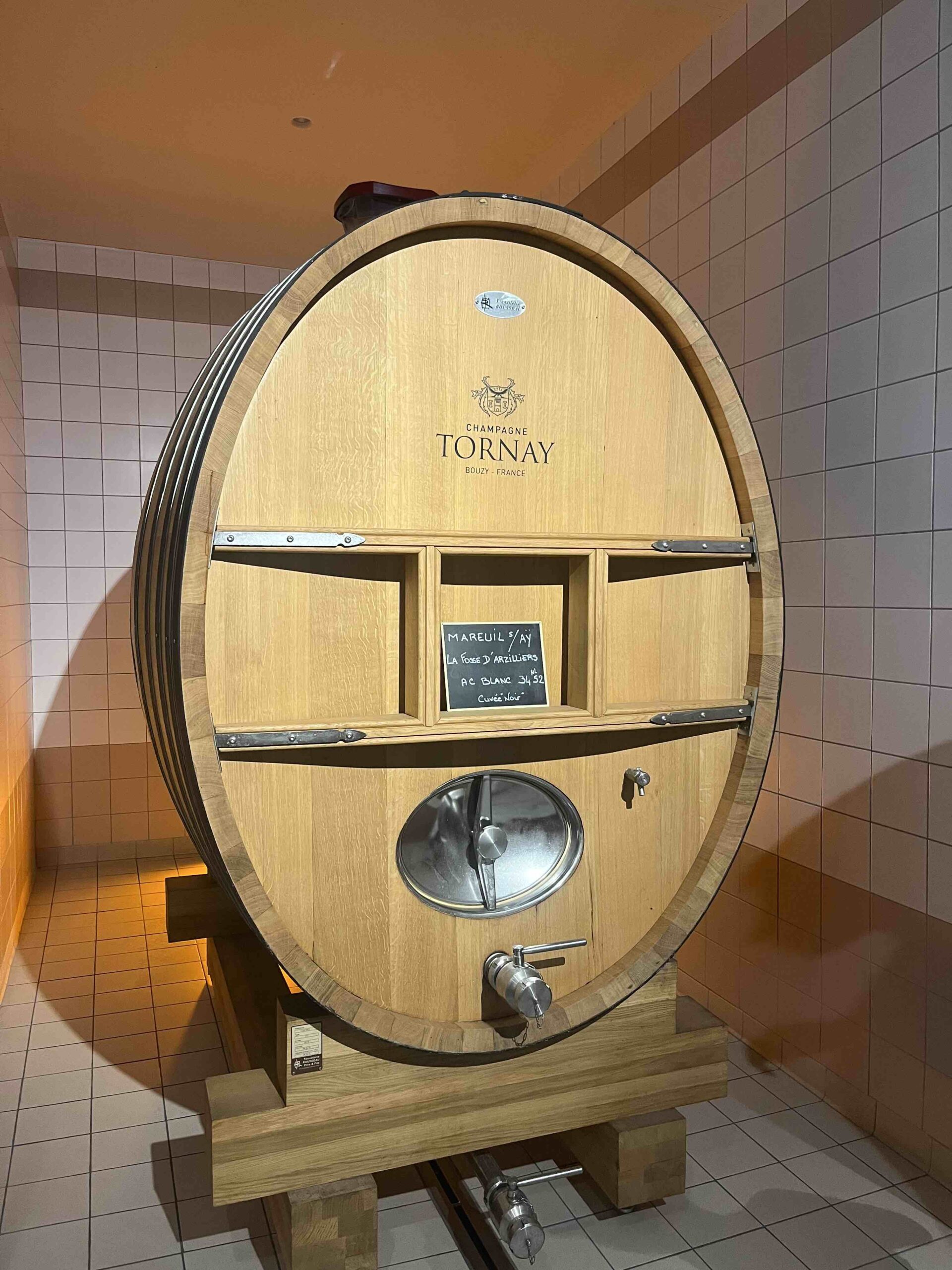
Before any tasting, it helps to see the work. Rows of bottles run back into the dark, resting on their lees, each one waiting for the family to decide it is ready. Some of these bottles have been down here for a decade. Opening one takes a few seconds. Getting it to that point takes years, and the cellar makes that obvious in a way no label ever could.
Why Bouzy is known for Pinot Noir
Pinot Noir runs through most of the Tornay range, and the village explains why. Bouzy’s south-facing Grand Cru slopes ripen Pinot Noir with real depth and structure, and the grapes hold their acidity well enough to age. Many growers here build their Champagnes around it, and tasting them one after another makes the village’s reputation easy to understand.
Bouzy Rouge, the local red
Most people come to the region for the sparkling wine, but Bouzy is also one of the few Champagne villages with a serious still red, and Champagne Tornay-Hutasse still makes it. Bouzy Rouge is made entirely from Pinot Noir grown in and around the village, a wine with centuries of history here and a real place in local identity.
It is a harder wine to make than it looks. Without bubbles to carry it, every part of the Pinot Noir is on show, so the fruit has to be good from the start. The result is a red that shows ripe berries, keeps its freshness, and carries the same Grand Cru character you find in the Champagnes.
The tasting
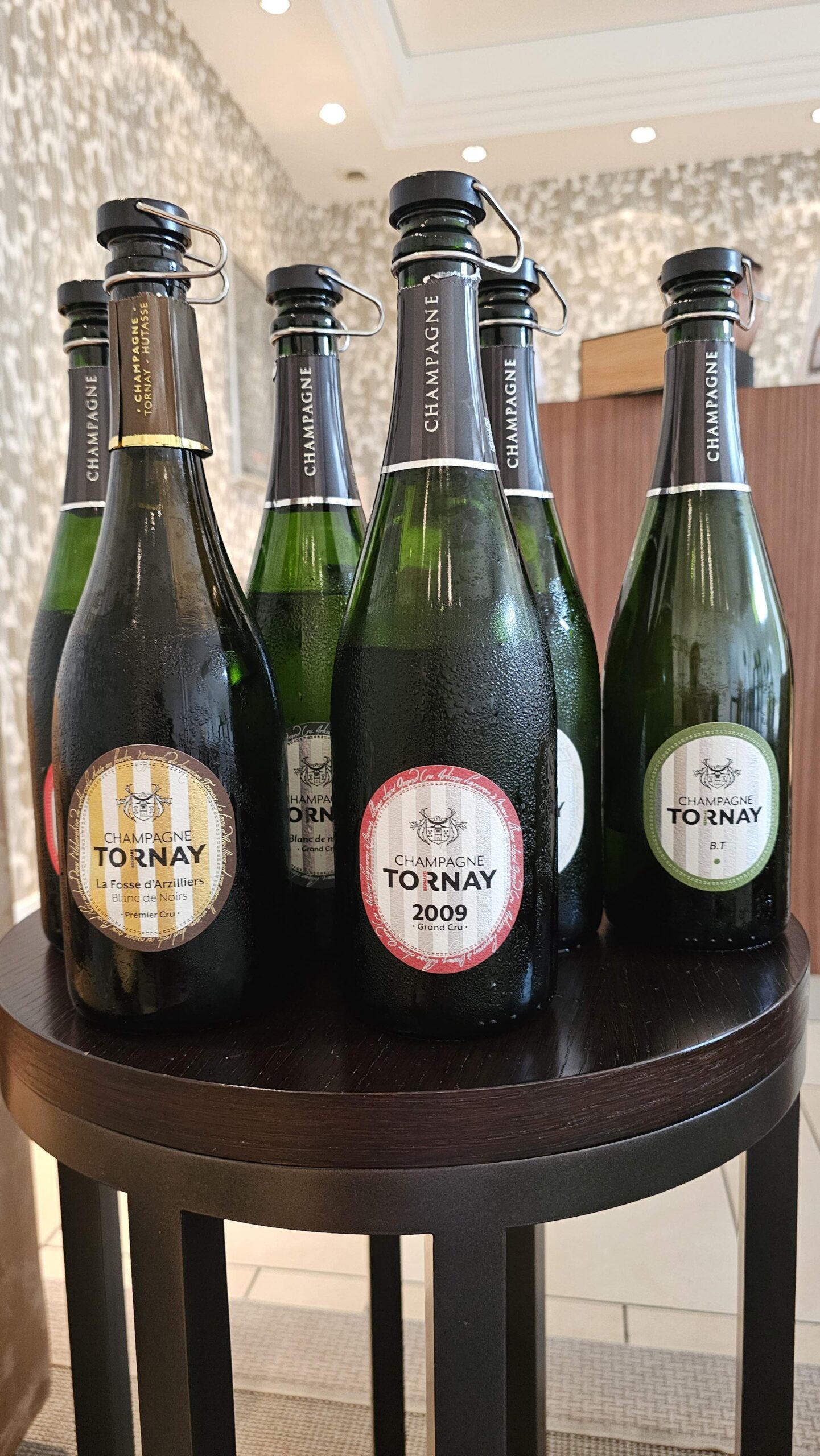
Rémy poured several of the cuvées for us, telling the story behind each blend as he went. The house makes so many different Champagnes that no single sitting could cover them all, which is part of the fun. The range runs from easygoing everyday bottles to vintages that have rested in the cellar for years.
Seeing the Millésime 2009 again brought back that evening in Reims. This time it meant more, because now we had seen the vineyards, met the family and understood the work behind it.
What we brought home
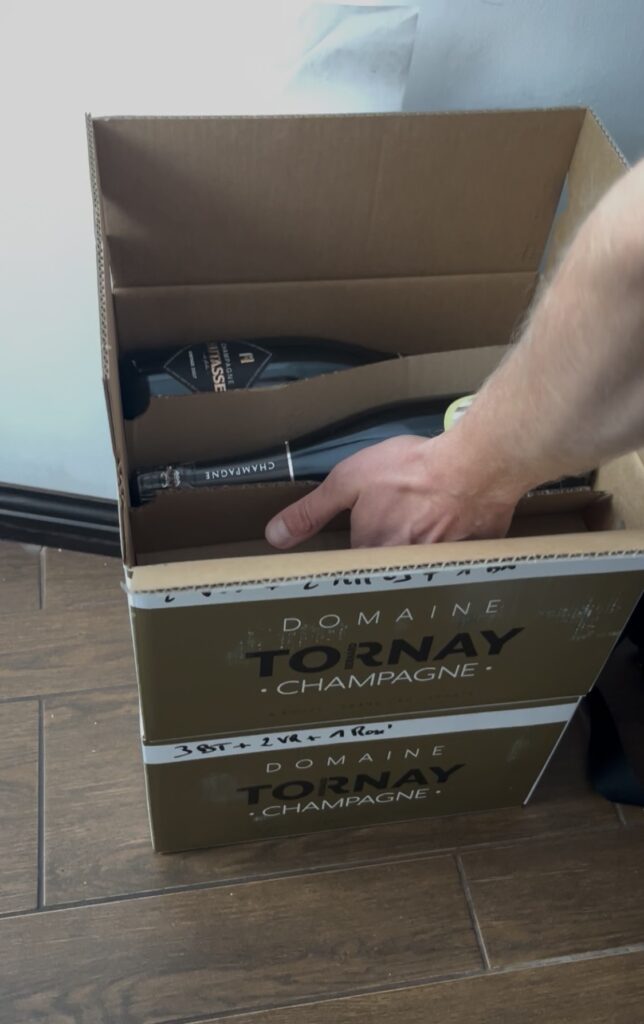
We came home with a mix: some we had tasted with Rémy, others we chose straight from the list on the strength of the range. Since then we have worked our way through all of them. The technical details and tasting notes below come from the house; the verdict after each is our own.
Champagne Tornay Brut
Technical details
- Blend: 70% Pinot Noir, 30% Chardonnay
- Dosage: 8 g/L
- Ageing: Minimum 3 years in cellar
The Brut is the door into the Tornay style and a good place to start. Bright gold in the glass, with a steady thread of fine bubbles, it opens on brioche, bread crust, mocha and ripe stone fruit. The palate is round and fresh, generous with fruit without turning heavy. Easy enough for an aperitif and sturdy enough to carry through a meal.
Champagne Hunters take: a versatile all-rounder and an easy place to start.
Champagne Tornay La Vieille Réserve
Technical details
- Blend: 70% Pinot Noir, 30% Chardonnay
- Dosage: 8 g/L
- Ageing: Minimum 6 years in cellar
La Vieille Réserve steps up in depth. The extra time in the cellar brings aromas of dried fruit, spring honey and gingerbread, then a fuller, rounder palate that keeps the freshness of the house style. Next to the Brut it feels more serious, a bottle for a slower evening or the dinner table.
Champagne Hunters take: one of the most complete wines in the range. Rich enough for seasoned drinkers, open enough for newcomers.
Champagne Tornay Rosé
Technical details
- Blend: 90% Chardonnay, 10% Bouzy Rouge Pinot Noir
- Dosage: 8 g/L
- Ageing: Minimum 3 years in cellar
Where a lot of rosé Champagne leans hard on red berries, this one balances freshness against a little maturity. Salmon-pink in the glass, with strawberry, candied fruit and citrus peel on the nose, then pink grapefruit, orange zest and soft red fruit on the palate, into a smooth, lasting finish. The splash of Bouzy Rouge gives it character without weight.
Champagne Hunters take: a rosé with enough poise for summer lunches, seafood and light desserts.
Champagne Tornay Extra Brut
Technical details
- Blend: 70% Pinot Noir, 30% Chardonnay
- Dosage: 0 g/L
- Ageing: Minimum 10 years in cellar
The Extra Brut was one of the surprises of the tasting. With no dosage and a full decade in the cellar, it rests entirely on the fruit and the winemaking. Toasted almond, hazelnut, candied yellow fruit and a touch of bourbon vanilla give it real depth, while the absence of any added sugar keeps the finish clean and precise. Despite its age, the wine never feels heavy. Those ten years added depth, not weight.
Champagne Hunters take: for anyone who likes their Champagne dry, mature and honest. A standout.
Champagne Tornay Blanc de Noirs Grand Cru
Technical details
- Blend: 100% Pinot Noir
- Dosage: 8 g/L
- Ageing: Minimum 3 years in cellar
Made only from Grand Cru Pinot Noir grown in Bouzy, this is the village’s grape on its own terms. Ripe orchard fruit, honey and a hint of gingerbread on the nose, then a palate that pairs richness with bright freshness. A slight, pleasant bitterness on the finish adds interest and makes it a good bottle for the table.
Champagne Hunters take: the clearest argument for why Bouzy and Pinot Noir belong together.
Champagne Tornay Millésime 2009 Grand Cru
Technical details
- Blend: 50% Pinot Noir, 50% Chardonnay
- Dosage: 8 g/L
- Ageing: Minimum 8 years in cellar
This is the wine that started the whole story back in Reims. The 2009 shows how well a mature Champagne can hold richness and freshness together. Dried fruit, ripe mirabelle plum, mango and a little cinnamon on the nose, then a generous, elegant palate that runs long, each mouthful turning up another layer. Not a bottle to rush. One to sit with and let open up in the glass.
Champagne Hunters take: the emotional heart of our visit, and a fine vintage in its own right.
Champagne Fernand Hutasse Vintage 2007
This is the one bottle we brought home from Rudy’s side of the cellar, the Fernand Hutasse & Fils range, where the older and rarer cuvées live. The draw is the vintage: a 2007 with well over a decade behind it. The house does not publish full technical details for it, which suits a wine like this, the kind of mature, small-run bottle the Hutasse cellar is known for. Complex and layered, it holds mature aromas against a freshness that has not faded, into a long, slow finish.
Champagne Hunters take: proof of what patience in the cellar can do, and the bottle that stayed with us.
Final thoughts
When we opened that bottle of Champagne Tornay in a rented flat in Reims, we had no idea that a year later we would be standing in the cellar it came from, talking to the family behind the label.
That is part of why we chase Champagne in the first place. Behind every bottle there are people, vineyards and years of work, and once in a while you get to meet them.
If you are planning a tour of the Champagne region, put Champagne Tornay-Hutasse on your list. The Champagnes are worth the trip, and so are the people, who clearly like sharing what they make and welcoming visitors into the family story.
If you wish to book a tour at Champagne Tornay-Hutasse, you can do it here.