The short answer is yes — Champagne can go bad. But “bad” means different things depending on whether the bottle is sealed or open, how it’s been stored, and what kind of Champagne it is. Most Champagne that people encounter isn’t dangerous to drink even after it’s past its prime. What changes is the experience: the bubbles, the aromas, the freshness. This guide explains exactly what to expect and how to catch a bottle before it lets you down.
Table of contents
- Does unopened Champagne go bad?
- Does opened Champagne go bad?
- How to tell if Champagne has gone bad
- How long does opened Champagne last?
- Past its peak vs actually bad
- Does vintage Champagne go bad?
- How to store Champagne so it doesn’t go bad
Does unopened Champagne go bad?
An unopened bottle of Champagne is sealed under pressure — the cork and wire cage keep air out, and the carbon dioxide inside keeps the wine stable. That means an unopened bottle won’t go bad in the way that food goes bad. It won’t become unsafe to drink. What it can do, over time, is go past its best.
For non-vintage Champagne (the most common style, without a year on the label), the sweet spot is within three to four years of purchase. These wines are made for freshness — they’re blended across multiple harvests specifically to taste bright and consistent right now, not in a decade. Leave a non-vintage Brut on a warm shelf for five or six years and you’ll still be able to drink it, but the bubbles will be finer (or absent), the fruit will have faded, and the wine may taste flat and slightly nutty in ways you weren’t expecting.
Vintage Champagne is a different story. Made from a single exceptional harvest and aged for many years before release, vintage Champagne is designed to develop over time. A 2008 or 2012 vintage from a serious house can easily improve for another decade or more in the right conditions. For these wines, “going bad” is much harder to do — the risk is more likely to be opening them too early than too late. 🙂
Does opened Champagne go bad?
Yes — and much faster than most people realise. Once you pop the cork, oxygen starts interacting with the wine and the carbon dioxide begins to escape. The clock starts immediately.
Within a few hours, the bubbles will noticeably diminish. By the next day, an opened bottle stored without a proper stopper will be flat. Within two to three days, most Champagnes will taste dull, oxidised, and noticeably different from how they tasted when first poured. By day five or six, many will taste unpleasant — stale, vinegary, or simply empty.
The speed of deterioration depends on how much wine is left in the bottle (more wine = slower oxidation), how it’s sealed, and how cold it’s kept. A half-empty bottle with a good Champagne stopper in the fridge can last two to three days in reasonable condition. A quarter-empty bottle on the counter at room temperature is struggling by morning.
How to tell if Champagne has gone bad
You can usually tell before you even taste it. Here’s what to look for:
No bubbles. Champagne that has genuinely gone bad will be completely flat. A few lazy bubbles is a warning sign. No bubbles at all, especially in a recently opened bottle, means something is wrong.
A dull or off-putting smell. Fresh Champagne smells bright — citrus, apple, toast, brioche, white flowers, depending on the style. Bad Champagne smells flat, vinegary, like wet cardboard, or in the worst cases like nail polish remover (a sign of acetaldehyde or ethyl acetate from oxidation or poor storage). If it smells wrong before it reaches your lips, trust that instinct.
Brown or orange colour. Champagne should be pale gold, straw-coloured, or (for rosé) salmon-pink. If it has turned noticeably brown or amber — especially if it was a young non-vintage wine — that’s oxidation, and the wine is past its prime.
Corked smell. A musty, damp, “wet dog” or mouldy smell means the wine is corked — affected by a tainted cork (caused by a compound called TCA). This can happen to any wine regardless of how well it was stored. Corked Champagne isn’t harmful, but it’s unpleasant and the wine should be returned if you bought it recently from a shop or restaurant.
A flat, sour or vinegary taste. If the smell seemed fine but the wine tastes sharp, sour, or sour-vinegary on the palate, it’s oxidised or past its best. This is most common in opened bottles that were left too long.
How long does opened Champagne last?
With no stopper, stored on the counter: a few hours before it’s noticeably worse. Drinkable but disappointing by morning.
With a good Champagne stopper (not a teaspoon in the neck — that doesn’t work, despite the myth) :):))), stored in the fridge: one to three days. The stopper keeps the pressure in and the cold slows oxidation. Most Champagne will hold reasonably well over a weekend this way, though it won’t taste exactly as it did when first opened.
With a vacuum stopper designed for sparkling wine: similar to above, possibly slightly longer, though the difference in practice is marginal. The key variable is the cold — refrigeration does far more to preserve an opened bottle than any stopper alone.
The one exception: very old vintage Champagne, particularly bottles with low or zero dosage. These wines are more fragile and can change dramatically within hours of opening. If you’re opening something special from a great vintage, drink it the same evening.
Past its peak vs actually bad
There’s an important distinction between Champagne that is past its drinking window and Champagne that has actually gone bad.
A non-vintage Brut that was bought five years ago and stored in a warm kitchen cupboard will probably taste flat, oxidised, and disappointing. It isn’t dangerous — it won’t make you ill. But it also isn’t enjoyable, and it bears little resemblance to what the producer intended. This is past its peak.
Champagne that is actually bad — in the sense of being faulty rather than just aged — will have off-aromas or off-flavours caused by a specific problem: cork taint, excessive oxidation, refermentation in the bottle (very rare), or heat damage. These faults often announce themselves immediately on the nose. If the wine smells actively wrong (not just flat), it’s bad in the meaningful sense.
The good news: Champagne that is merely past its peak won’t harm you. Champagne that is actively faulty also won’t harm you — it’s just unpleasant. When in doubt, pour it down the sink and open something better.
Does vintage Champagne go bad?
Vintage Champagne from a good producer and a good year is one of the most age-worthy wines in the world. A well-stored bottle from 1996, 2002, 2008, or 2012 can be not just drinkable but genuinely spectacular today — more complex, more layered, and more complete than it was when first released.
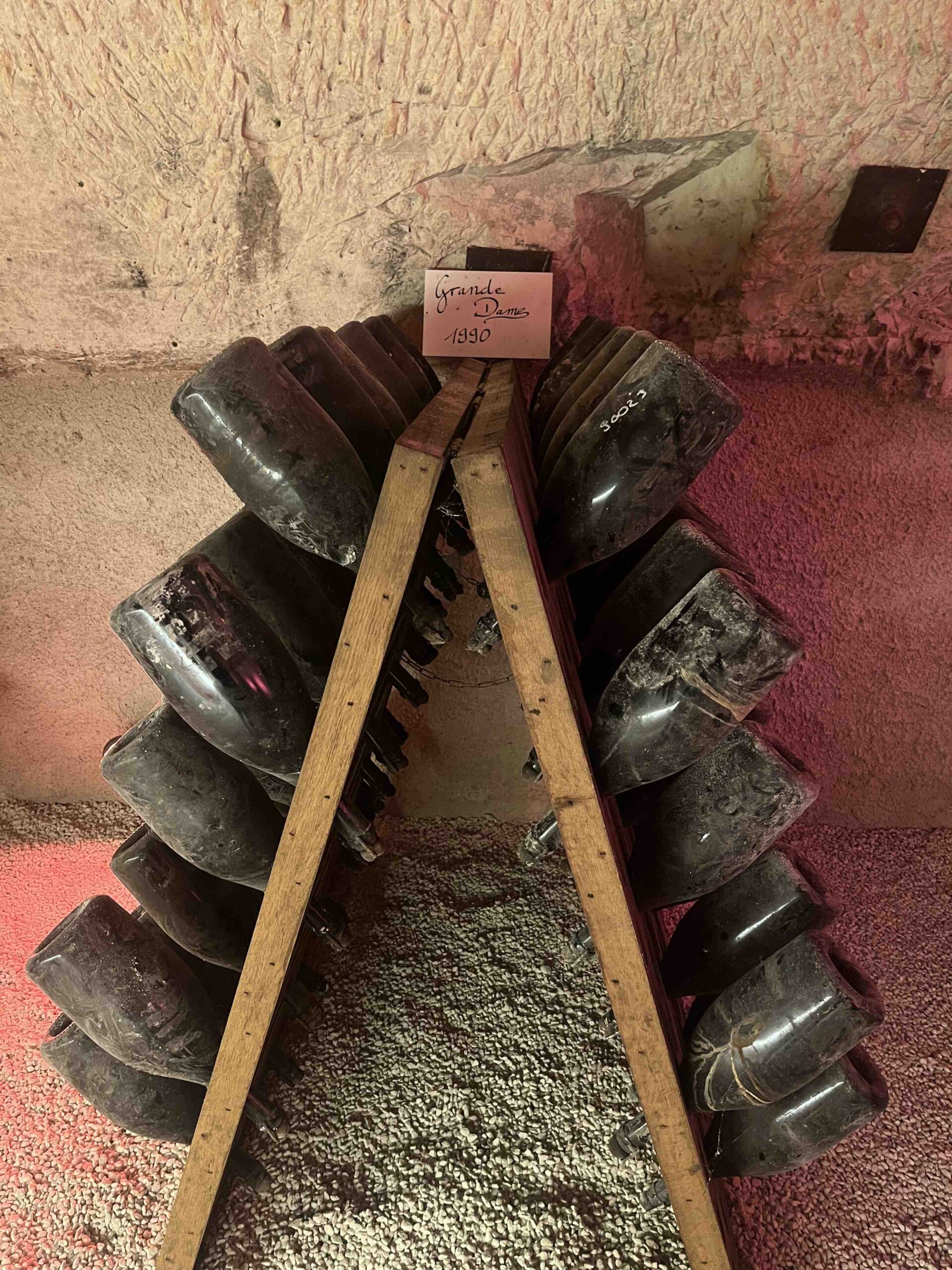
That said, vintage Champagne isn’t immortal. Eventually — even in perfect conditions — a wine will pass its peak and begin to decline. The timeline varies enormously by producer, vintage, and storage, but most vintage Champagnes are at their best somewhere between 10 and 25 years after harvest. After that, the risk of disappointment grows. A great bottle will still be interesting; a lesser one may taste flat and tired. We have tried different 1990 champagnes and one was fresh but other was not very fresh, so it depens.
The biggest risk with vintage Champagne isn’t age — it’s poor storage. Heat is the enemy. A bottle kept in a warm flat for ten years will go bad far faster than the same bottle kept in a proper cellar or wine fridge at a stable 10–12°C.
How to store Champagne so it doesn’t go bad
Keep it cold. The ideal storage temperature for Champagne is 10–12°C (50–54°F) — consistent, cool, and away from temperature swings. A wine fridge is ideal. A cold cellar works well. A regular kitchen fridge is fine for short-term storage (a few weeks) but runs slightly too cold and too dry for long-term aging. Avoid storing Champagne anywhere warm.
Keep it dark. Light — especially UV light — damages wine over time. Store bottles away from direct sunlight. Dark cellars, wine fridges, or boxes all work well.
Store it horizontally. For corks, horizontal storage keeps the cork moist and prevents it from drying out and letting air in. Most modern Champagne stoppers are designed to hold moisture even upright, but horizontal is still the safer long-term choice.
Avoid vibration. Constant vibration disturbs the sediment and can affect how a wine develops. Don’t store bottles next to a washing machine or on top of a fridge.
Once opened, use a stopper and refrigerate immediately. Don’t leave an open bottle on the table at room temperature and hope for the best. Get it in the fridge with a proper Champagne stopper as soon as you’ve poured.
If you’re looking for a place to drink Champagne that’s been stored and served properly — by people who know what they’re doing — our map is the best place to start.
If your bar or restaurant serves Champagne by the glass with proper storage and glassware, add your listing to our map.