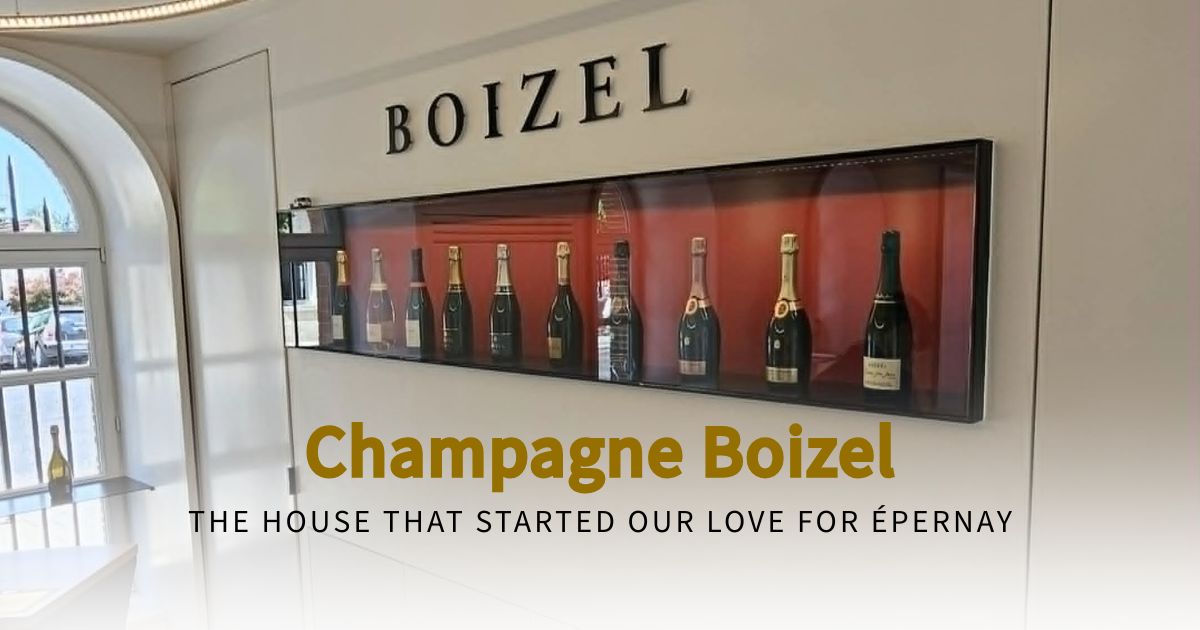
We visited Boizel in May 2023, just after getting married, during our honeymoon in Champagne region. We had enjoyed Champagne for years, but this was our first real Champagne House tour.
At the time, Champagne Hunters didn’t exist.
We were simply two newlyweds in Épernay, curious about Champagne and excited to see what actually happens behind the bottles.
Table of Contents
- Boizel at a glance
- A Champagne House with almost 200 years of history
- Boizel and Avenue de Champagne
- Where does Boizel get its grapes?
- Avize and the Côte des Blancs
- How Boizel makes its Champagne
- Time is one of Boizel’s ingredients
- The Boizel Trésor
- The Boizel wines we love
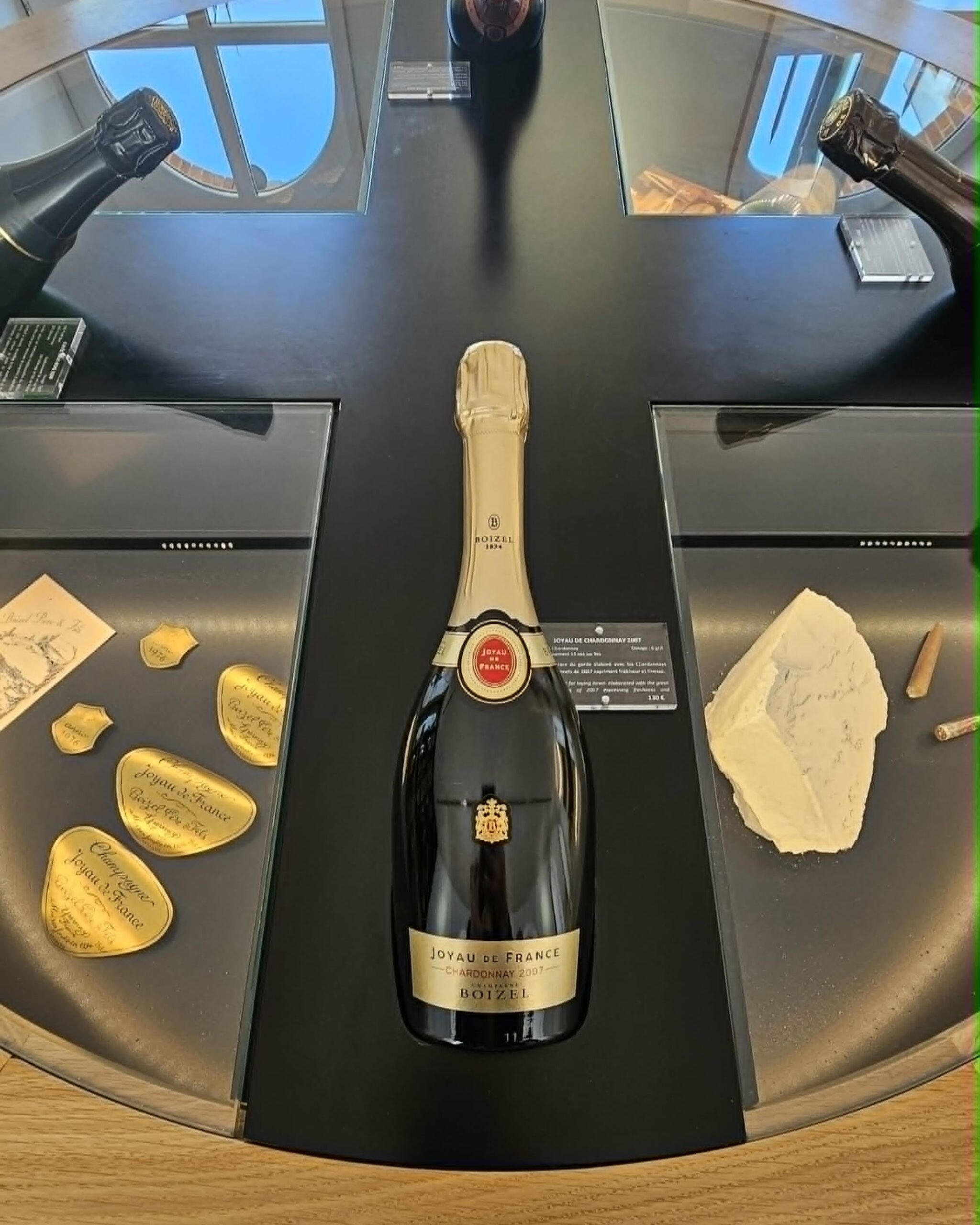
- The two Joyau Champagnes we tasted
- How to book a tour at Champagne Boizel?
- We would go back tomorrow
- What to bring home from the Boizel boutique
- Boizel Champagne House visit FAQ
Boizel at a glance
Quick facts about Champagne Boizel
Champagne House
- Founded
- 1834, by Auguste Boizel and Julie Martin, in Épernay
- Ownership
- Family House, now in its sixth generation, led by brothers Florent and Lionel Roques-Boizel
- Location
- 46 Avenue de Champagne, Épernay, part of the UNESCO World Heritage site
- Vineyards
- Around 7 hectares in Grand Cru villages of the Côte des Blancs, including Avize and Le Mesnil-sur-Oger, plus grapes from partner growers across Champagne
- House style
- Long ageing and a balance between depth and precision, with a minimum of three years on the lees
- Known for
- The prestige Joyau de France, and the rare Trésor Collection drawn from a cellar that goes back to the founding 1834 vintage
- A first
- Boizel made what it describes as its first Blanc de Blancs in 1929
- Visiting
- Guided tours with a tasting, right on the Avenue de Champagne
A Champagne House with almost 200 years of history
Boizel was founded in Épernay in 1834 by Auguste Boizel and his wife Julie Martin. They were both originally pastry chefs and came from the Côte des Blancs. Julie’s family had winegrowing roots in Aÿ and Mareuil-sur-Aÿ, so the connection to Champagne was already part of the family story before Boizel existed. The couple chose Épernay as the home of their new Champagne House and originally called it Boizel-Martin.
Six generations later, Boizel is still a family Champagne House. Today, brothers Florent and Lionel Roques-Boizel lead the House, continuing a family tradition that has always combined respect for Champagne’s terroirs with a willingness to experiment and evolve.
That long family line still shapes how Boizel works today.
The House has survived two world wars, changing markets and generations of winemaking trends while remaining connected to the same place: Épernay.
During the First World War, Champagne was heavily damaged, and Boizel was not spared. The House sheltered people and cared for the wounded during the bombings of 1917. After the war, Jules Boizel and his wife Louise rebuilt the business and expanded its international reach. In 1923, Boizel began shipping its Champagnes to Australia.
One moment in the House’s history stands out.
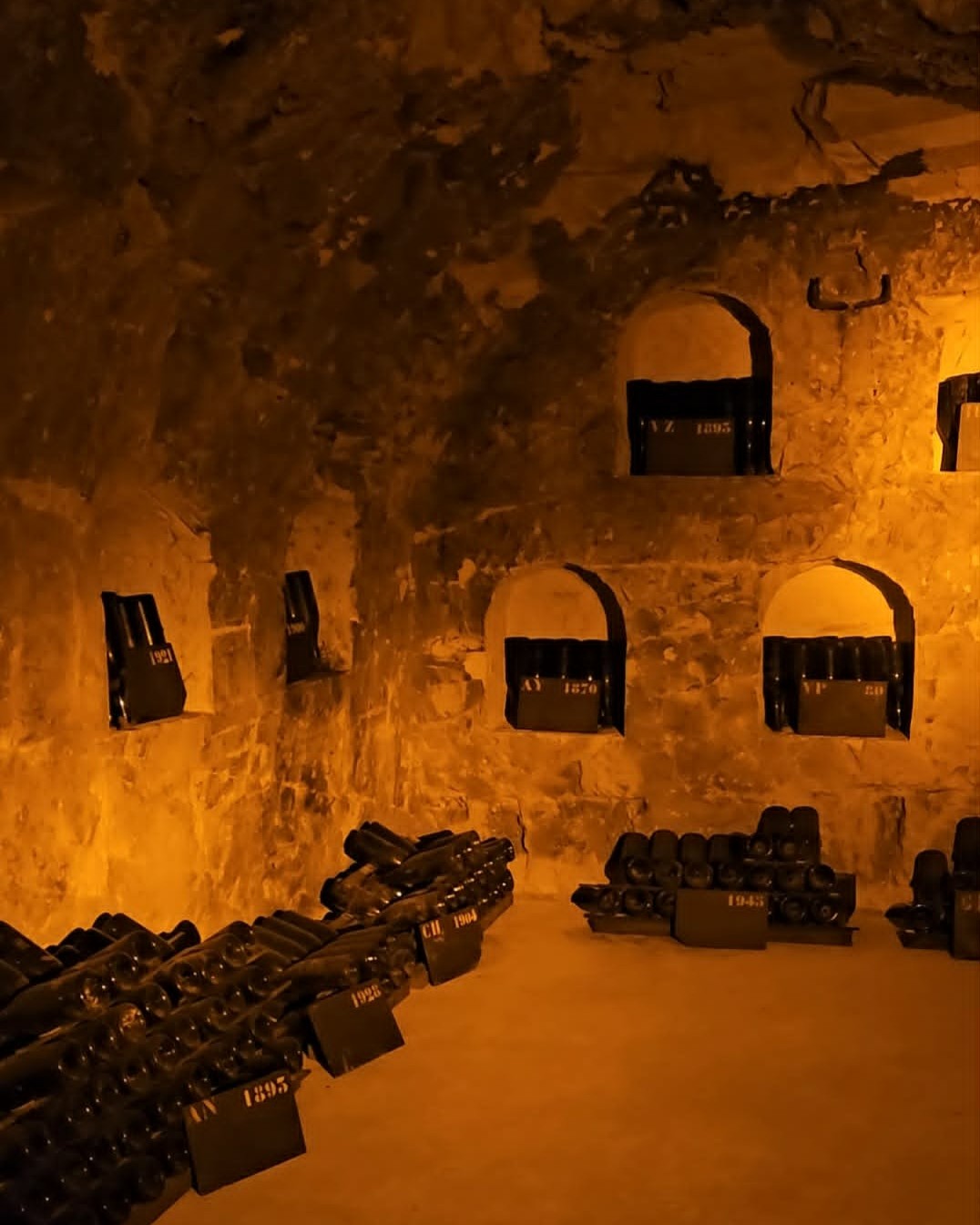
In 1929, Jules and Louise Boizel created what the House describes as its first Blanc de Blancs. Some bottles from that era are still preserved in the Boizel Trésor cellar today.
Boizel and Avenue de Champagne
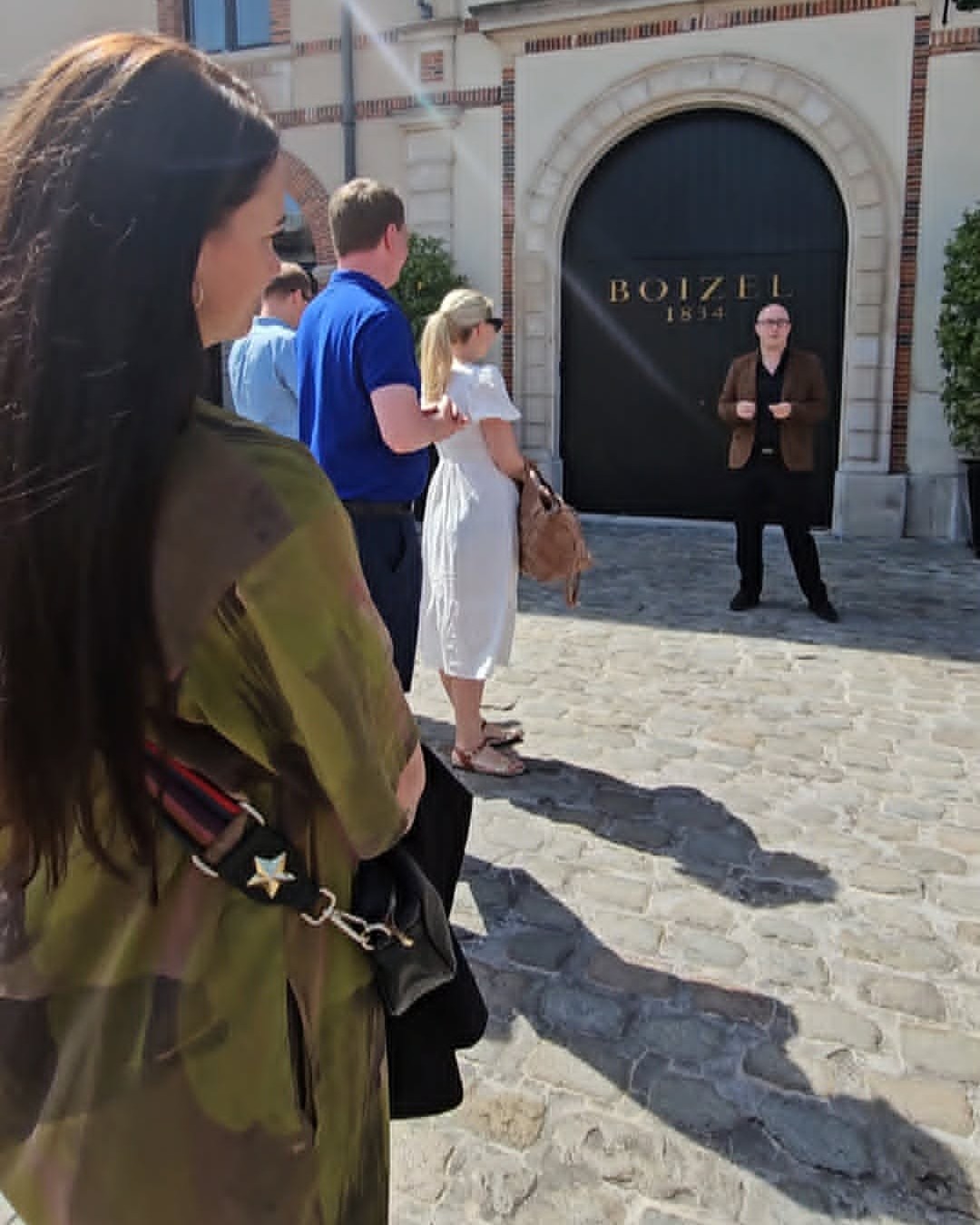
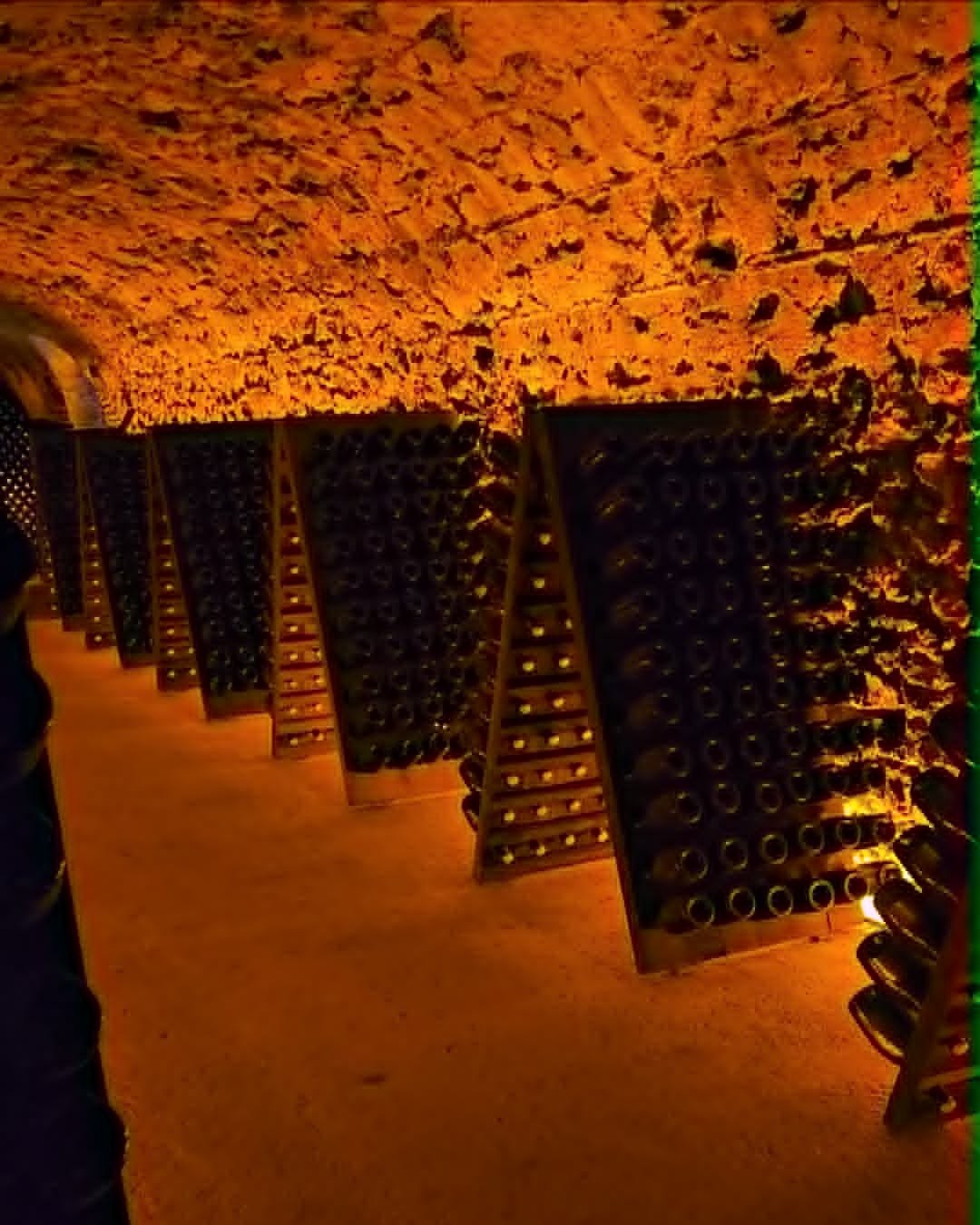
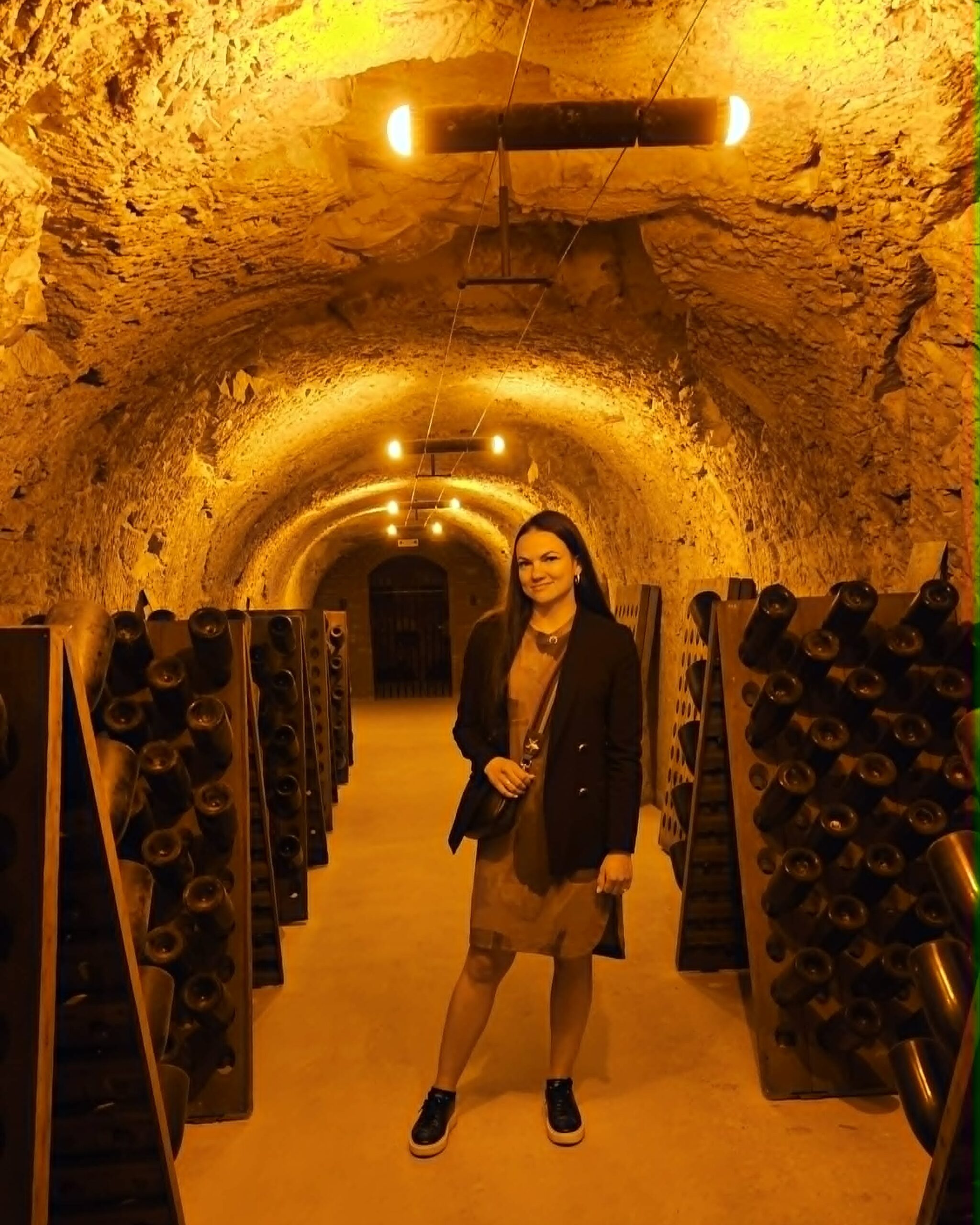
Boizel’s home is 46 Avenue de Champagne, right in the middle of one of the most famous Champagne streets in the world.
The House has been at this address for more than 40 years, in a building made up of two symmetrical pavilions with a large semi-underground cellar. Beneath the property, the cellars provide the dark, cool environment where the wines are allowed to develop slowly.
The Avenue de Champagne itself has an incredible concentration of Champagne history. Beneath the street are more than 110 kilometres of chalk cellars, filled with millions of bottles. The avenue became officially known as Avenue de Champagne in 1925, when Épernay renamed the former Rue du Commerce. Today it forms part of the UNESCO-listed Champagne landscape.
Where does Boizel get its grapes?
One of the interesting things about Boizel is that its own vineyard holdings are relatively small.
The House owns around 7 hectares of vineyards, located in some of Champagne’s most prestigious crus, including Avize and Le Mesnil-sur-Oger in the Côte des Blancs. These villages are particularly important to the Boizel family, with family roots in the area going back generations.
But Boizel’s wines are not made exclusively from its own grapes.
The House also works with partner winegrowers who supply Chardonnay and Pinot Noir from Grand and Premier Cru vineyards in the Côte des Blancs and Montagne de Reims, as well as Meunier from selected vineyards in the Vallée de la Marne.
This gives Boizel access to a much wider mosaic of Champagne terroirs.
And that matters because Champagne is never just about the grape variety.
The soil, exposure, microclimate, village and individual vineyard plot all influence the wine. Boizel treats each of these components separately, trying to preserve the character of each cru and parcel before bringing them together in the final blends.
Avize and the Côte des Blancs
Avize has a particularly important place in the Boizel story.
It is a Grand Cru village in the Côte des Blancs, planted entirely with Chardonnay. The vineyards sit on chalky slopes, and the chalk is one of the defining features of the area. Boizel still owns vineyards in Avize today.
The House’s Avize Blanc de Blancs is made entirely from Chardonnay from this Grand Cru village. Its character is described by Boizel in terms of freshness, tension, saline minerality and a chalky texture – a very different expression from what you might get from a richer, more fruit-driven Champagne.
This is one of the things we love about Champagne: you can drink it for years and still find that a single village, vineyard or grape completely changes the glass in front of you.
How Boizel makes its Champagne
Inside the winery, Boizel works parcel by parcel and cru by cru.
Each plot is vinified separately in small vats, allowing the winemaking team to understand the individual wines before deciding how they will eventually be blended. Most of the wines are made in temperature-controlled stainless-steel tanks, but Boizel also uses oak barrels and larger wooden tuns for part of the production.
Malolactic fermentation is used to give the wines a smoother texture and help develop the biscuit and brioche notes that are so familiar in mature Champagne.
Then comes one of the most important parts of the Boizel style: blending.
Every year, Florent and Lionel Roques-Boizel taste the wines from the latest harvest alongside reserve wines from previous years. The aim is not simply to reproduce a recipe. The blend is adjusted according to what each vintage and each terroir has given them.
This is particularly important for non-vintage Champagne.
A bottle of non-vintage Champagne may contain wines from several different harvests, and reserve wines help the House maintain a recognizable style from year to year while still allowing each vintage to contribute its own character.
Time is one of Boizel’s ingredients
One thing that really stands out when you learn about Boizel is how much importance the House places on ageing.
Its Champagnes spend years resting in the cellars, in darkness and cool temperatures, while the wines develop on their lees. The minimum ageing period at Boizel is three years, but some wines spend much longer in the cellar. Joyau can age for up to 15 years, while the Trésor Collection contains wines that have spent several decades maturing.
That patience is particularly evident in the vintage Champagnes.
Boizel’s vintage wines are made to express the character of a particular year rather than simply reproduce the House style. And this is one reason we keep coming back to Boizel Champagnes.
Their non-vintage wines are lovely on their own, but the vintages are where Boizel gets really interesting. They carry more depth and texture, and that mix of freshness and maturity that makes older Champagne so easy to keep pouring.
The Boizel Trésor
If there is one part of the House that feels almost magical, it is the Trésor cellar.
The name means “treasure”, and it is quite literally a treasure of Champagne history.
The cellar contains some of the greatest vintages in Boizel’s history, including bottles from the mythical 1834 vintage, the very year the House was founded. Each generation has added exceptional bottles to the collection, preserving them in the cool, dark conditions of the cellar.
Some of these historic wines have eventually become part of the Trésor Collection. Boizel currently highlights rare releases including the 1985 and 1990 vintages, disgorged shortly before release after decades of ageing.
Imagine opening a bottle that has been resting underground for decades. That wine has been maturing in the dark for longer than many of us have been alive, slowly becoming something you simply cannot buy young.
The Boizel wines we love
There is something very easy about enjoying Boizel’s classic Champagnes.
You don’t need a special occasion or a long explanation. Open the bottle, pour it into a proper glass and enjoy. But once you start exploring the range, there is much more to discover.
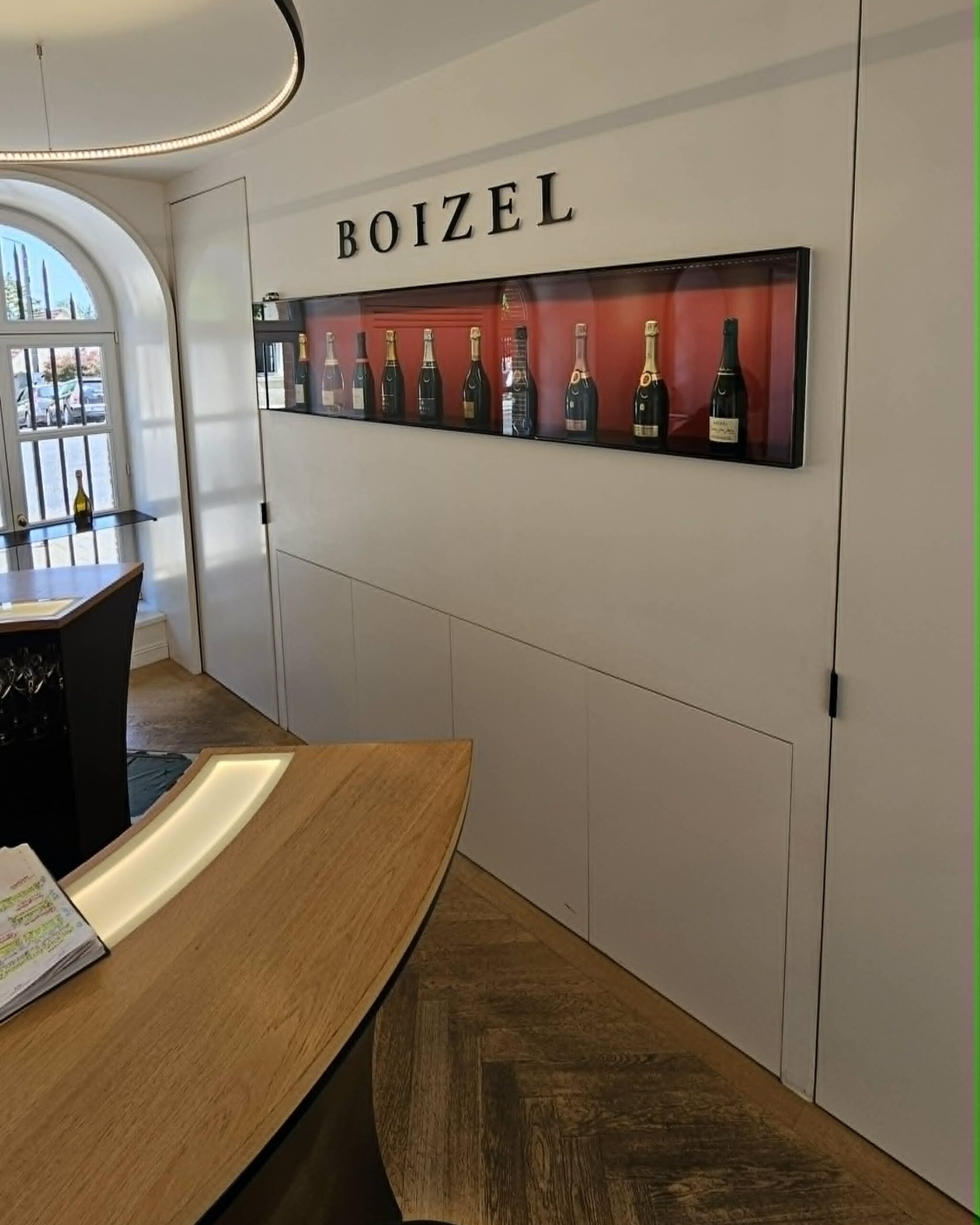
Boizel’s portfolio includes its non-vintage Champagnes, vintage wines, Blanc de Blancs and Blanc de Noirs, the prestige Joyau de France, and the exceptionally rare Trésor Collection. The House describes the overall style as a search for balance between depth and precision, with long ageing playing an important role.
Joyau is particularly fascinating. The current Joyau 2013, for example, is made from 55% Pinot Noir and 45% Chardonnay, with grapes from selected Grand and Premier Cru vineyards. Ten percent of the wine was vinified in old oak barrels and the Champagne spent more than ten years ageing on its lees.
The two Joyau Champagnes we tasted
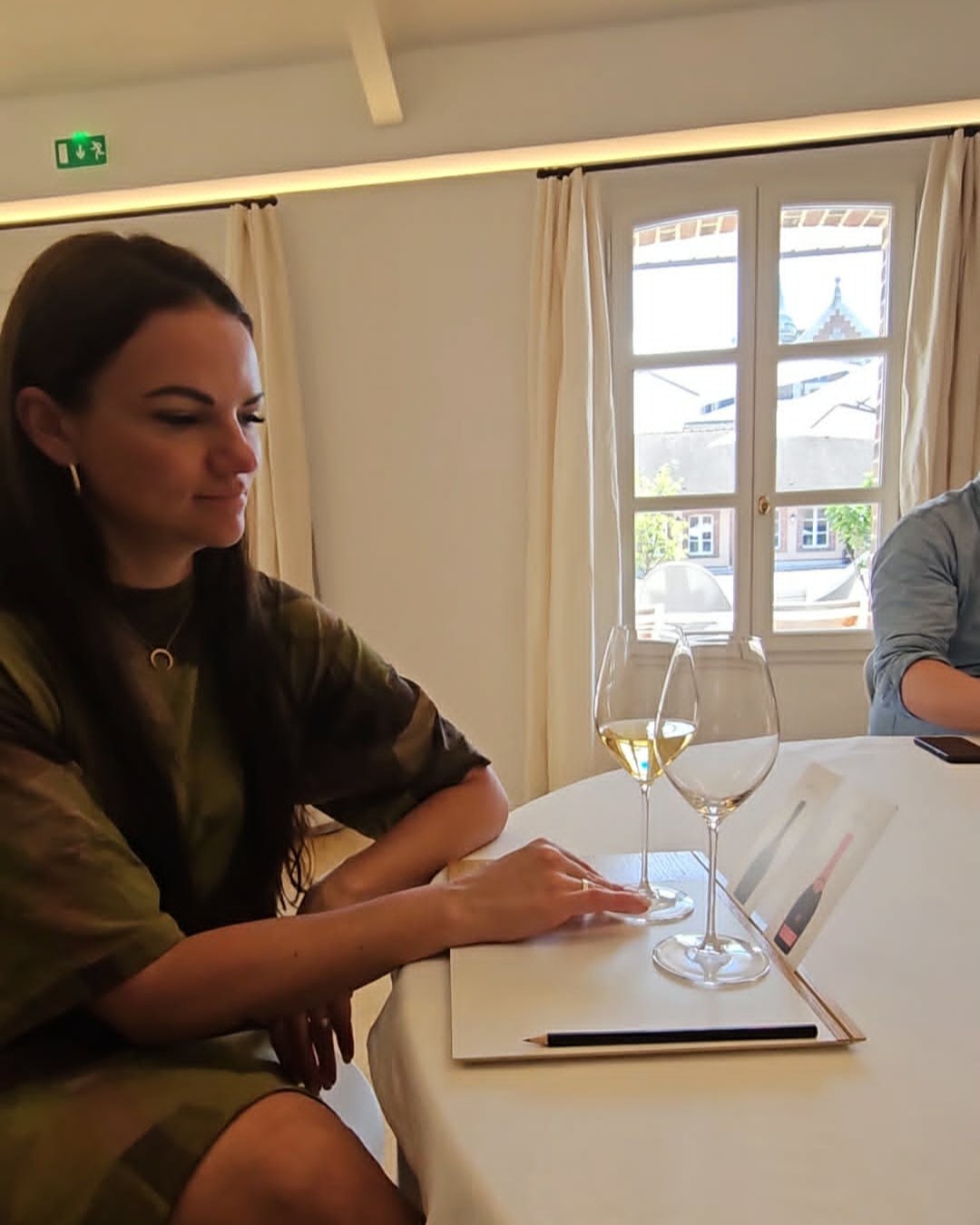
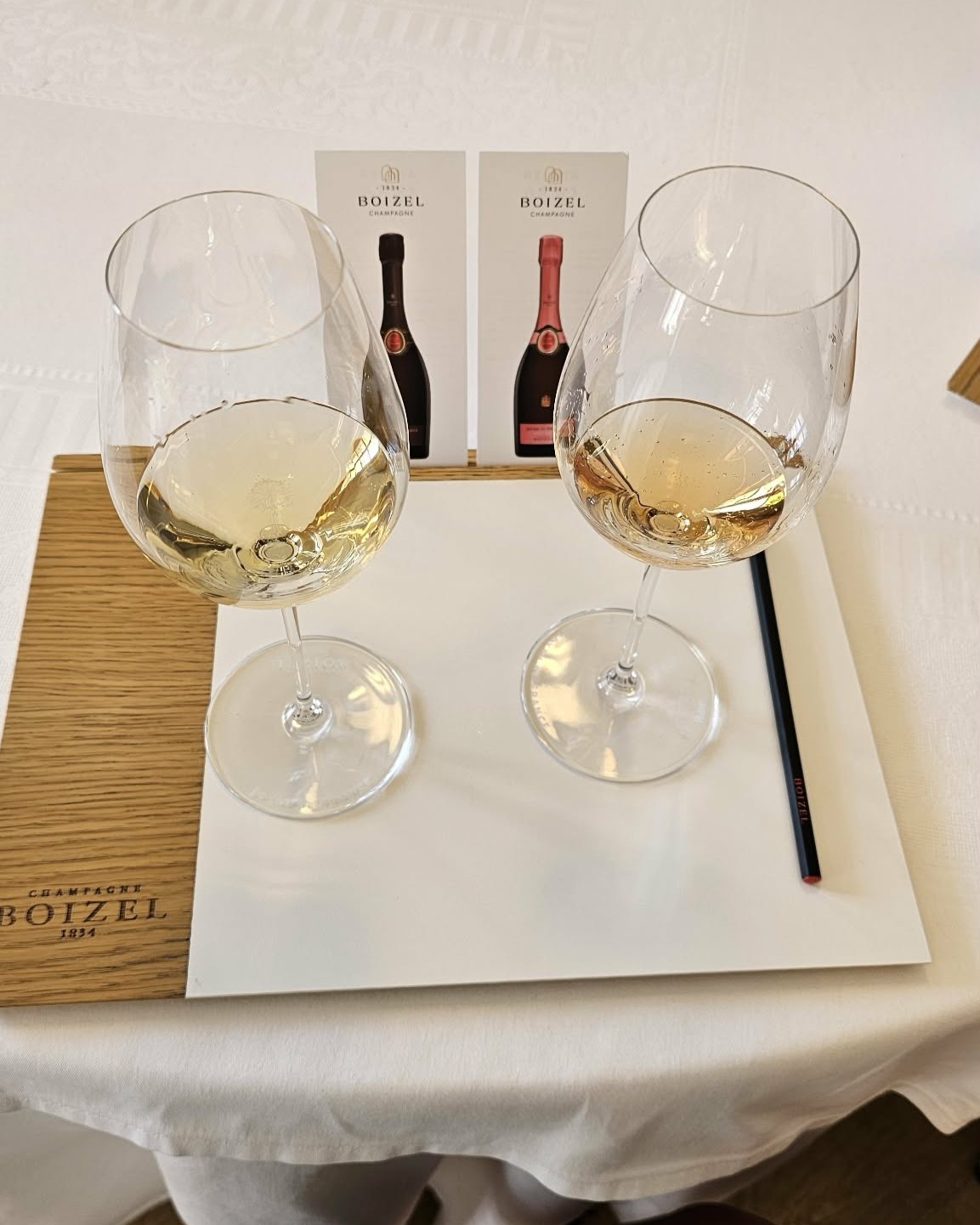
We booked the Joyau visit, so our tasting centred on Boizel’s prestige cuvée. We were poured two vintages, both aged twelve years on the lees before release.
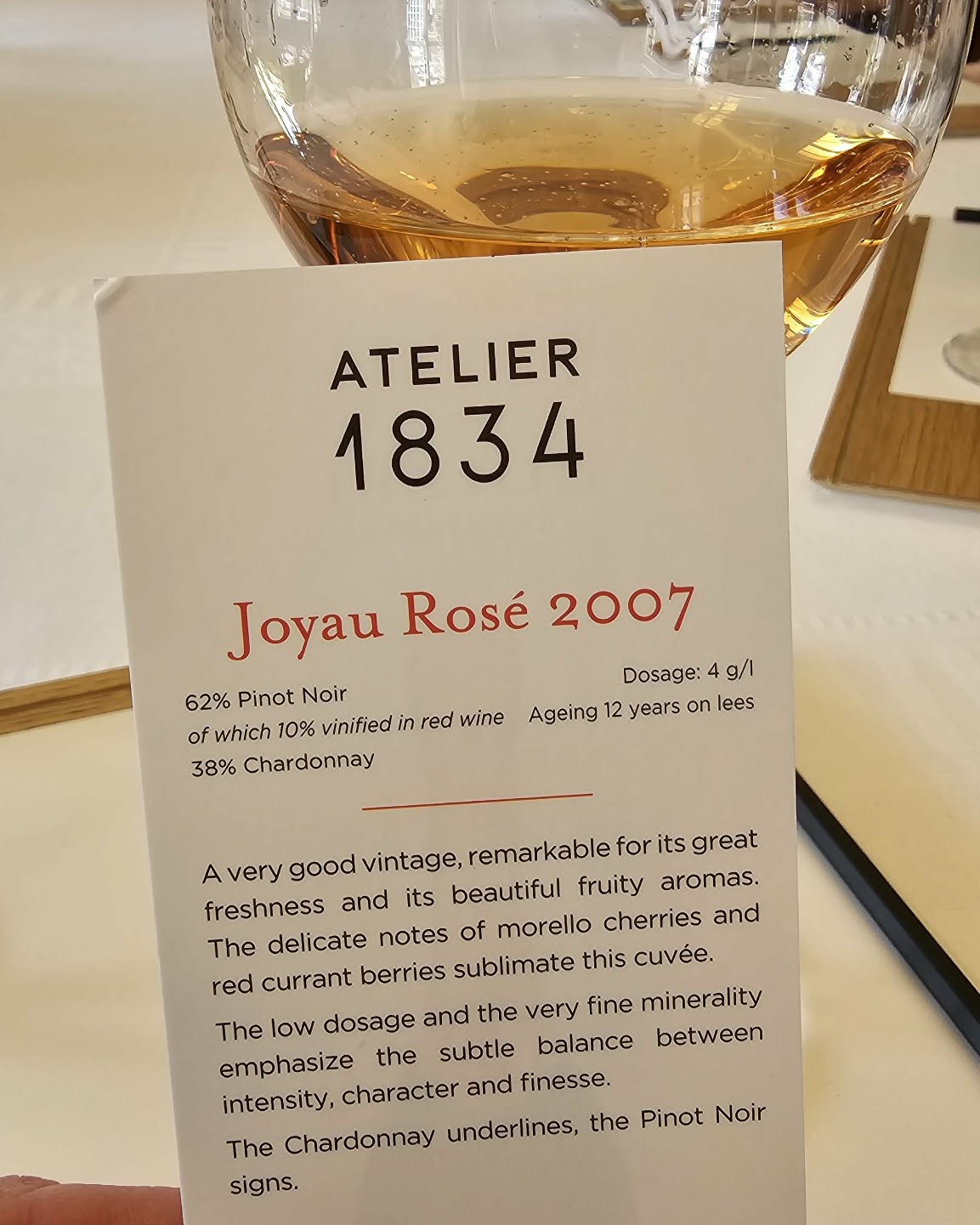
First came the Joyau Rosé 2007, a blend of 62% Pinot Noir, some of it vinified as red wine, and 38% Chardonnay, finished with a low 4 g/l dosage. It sat in the glass as a soft copper-pink and opened on red fruit, morello cherry and redcurrant, held together by a fine, almost saline minerality. With so little dosage the wine stayed taut rather than sweet, and after more than a decade in the cellar it still tasted fresh.
The Joyau 2008 was the one Boizel clearly holds highest. 60% Pinot Noir, 40% Chardonnay, a small part vinified in oak, and a dosage of just 3 g/l. This glass was rounder and more gourmand, with frangipane, candied peach and a note of dried fruit from the long ageing, and a finish that kept going after the sip. Silky was the word that stuck with us.
If you want to understand what Boizel is going for, the Joyau visit is a good way in. The House sums up its own style on the tasting card in five words: “the Chardonnay underlines, the Pinot Noir signs.”
How to book a tour at Champagne Boizel?
Boizel welcomes visitors right on the Avenue de Champagne, so a tour here slots easily into a day in Épernay. Every visit walks you through how the Champagnes are made, from le Cellier with its oak barrels to la Cuverie with its stainless-steel vats, then down into the historical cellars that form part of the UNESCO World Heritage site and past the family’s Trésor. After that, you sit down to taste.
There are three ways to visit:
- The Millésime visit is the classic group tour, around an hour and a half, finishing with two Champagnes: currently the Brut Réserve, the House’s ambassador, alongside the Grand Vintage 2019.
- The Joyau visit follows the same route but pours higher, with two of Boizel’s prestige vintages, currently the Joyau 2012 and the Joyau Rosé 2012.
- If you would rather have the House to yourselves, the private Trésor experience runs around two hours and tastes four Champagnes in a private lounge: two non-vintage and two of the most prestigious vintages Boizel keeps back.
Group tours run in French or English for up to twelve people. They are not suited to children under seven, pets stay at home, and the cellars are accessible to visitors with limited mobility. Book ahead rather than turning up, as tours are small and fill quickly in the busier months.
Good to know
- Address: 46 Avenue de Champagne, 51200 Épernay
- Group size: 1-12 people
- Languages: French and English
- Bookings by phone: +33 3 26 55 91 49
- Email: contact@boizel.fr
- Book online: Boizel visits
We would go back tomorrow
Our visit to Boizel happened before Champagne Hunters.
There was no Champagne Hunters map. No collection of Champagne bars and restaurants. No idea that we would eventually spend so much time talking about Champagne, searching for Champagne places around the world and building something around that passion.
There was just a honeymoon, two glasses of Boizel and a street full of cellars we didn’t yet know we would keep coming back to. Épernay got under our skin that week. If you are planning your first visit to Champagne, put 46 Avenue de Champagne on your list.
What to bring home from the Boizel boutique
The Boizel boutique sits right at the House, and it is worth leaving room in your bag. Past the bottles, there are a few things here you will not find in most Champagne shops.
Start with the unexpected. Boizel makes a Ratafia, the Champagne region’s old aperitif of grape juice stopped with marc, and a Rosé des Riceys, one of France’s rarest still pink wines, from the far south of Champagne. Neither travels much beyond the region, so this is the place to try them.
Then the smaller finds. There is an embroidered sommelier’s apron, an eco-wood ice bucket, and Boizel’s own Champagne glasses if you want to pour at home the way they pour on the tour. Collectors tend to reach for the little 1/43 Renault Juva 4, a miniature of the black-and-white delivery van that has become part of the House’s image. And an absolute must-have purchase from every Champagne House you visit, is the Champagne stopper.
You can browse it all in person on the Avenue de Champagne, or online at boutique.boizel.com. Keep in mind that delivery outside mainland France is arranged case by case, so if you are travelling, it is often easiest to carry a bottle or two home with you.
Boizel Champagne House visit FAQ
Yes. Boizel welcomes visitors at 46 Avenue de Champagne in Épernay and runs guided tours that take you through the winery and the historical cellars before a tasting. Book in advance, as tours run in small groups.
Tours are booked online through the Boizel visits page, or by phone on +33 3 26 55 91 49. You can also email contact@boizel.fr. Booking ahead is recommended, especially in spring and summer.
Boizel offers three tasting experiences at different price points, from the group Millésime and Joyau visits to the private Trésor experience. Current prices are shown on the Boizel booking page, since a private tasting of rare vintages naturally costs more than a standard group visit.
Boizel is at 46 Avenue de Champagne, 51200 Épernay, in the heart of the Avenue de Champagne, part of the UNESCO World Heritage site. It sits within easy walking distance of Épernay’s other Champagne Houses.
The group Millésime and Joyau visits take around an hour and a half. The private Trésor experience runs longer, at around two hours, as it includes a larger tasting in a private lounge.
The tours are not suitable for children under seven. Older children are welcome, but keep in mind the visit centres on a Champagne tasting made for adults.
No, pets are not allowed on Boizel tours or in the cellars.
Paigutuseks soovitan need lisada loogilisse järjekorda: “How long does a Boizel tour last?” kohe “How much does a Boizel tour cost?” järele, ning laste ja lemmikloomade küsimused “What Champagnes do you taste” järele, enne Trésori küsimust. Nii liigub FAQ sujuvalt praktilistelt detailidelt maja loo juurde.
It depends on the experience. The Millésime visit ends with two Champagnes, the Joyau visit pours two prestige vintages, and the private Trésor experience includes four Champagnes tasted in a private lounge, from non-vintage cuvées to Boizel’s most prestigious vintages.
The Trésor is Boizel’s private cellar of historic vintages, holding bottles that go back to the House’s founding year of 1834. Each generation has added exceptional wines to it, and a small number are occasionally released to collectors as the Trésor Collection.