
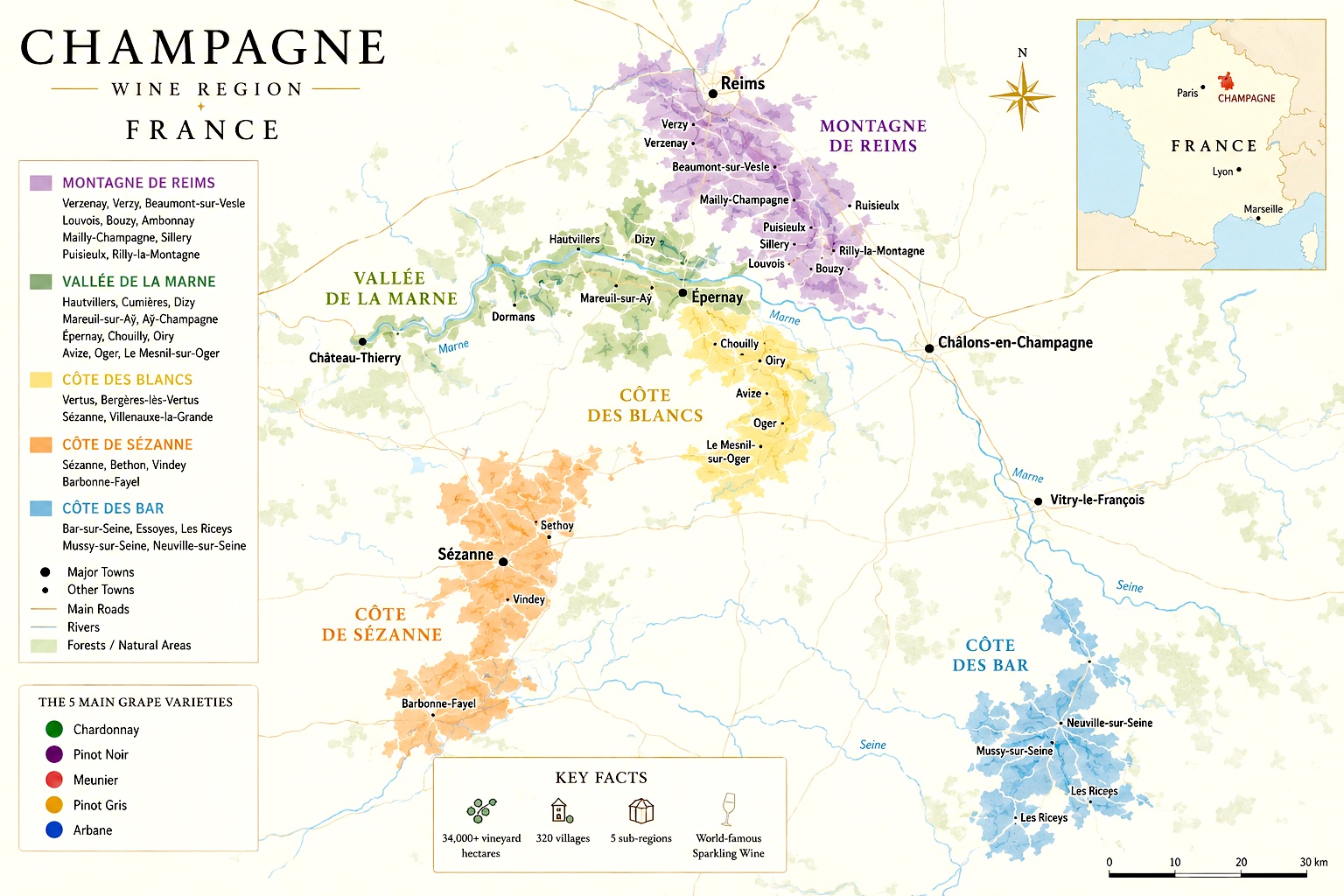
Champagne comes from Champagne – a real, specific region in northeastern France, about 90 minutes by train from Paris. Its boundaries aren’t a marketing idea; they’re written into French and EU law.
The heart of the region
The region centres on two main cities: Reims, home to grand Champagne houses and a stunning Gothic cathedral, and Épernay, where the famous Avenue de Champagne is lined with maison after maison, many with vast chalk cellars running beneath the street.
Why the chalk matters
Underneath much of Champagne sits a thick layer of chalky soil, left behind by an ancient sea. It drains well, reflects sunlight back onto the vines, and keeps the enormous underground cellars at a steady, cool temperature all year – ideal conditions for slowly ageing millions of bottles.
A cool climate on purpose
Champagne sits near the northern limit of where wine grapes can reliably ripen, and that’s exactly the point. The cool climate keeps natural acidity high, which is what gives Champagne its signature freshness and its ability to age for decades in the right bottles.