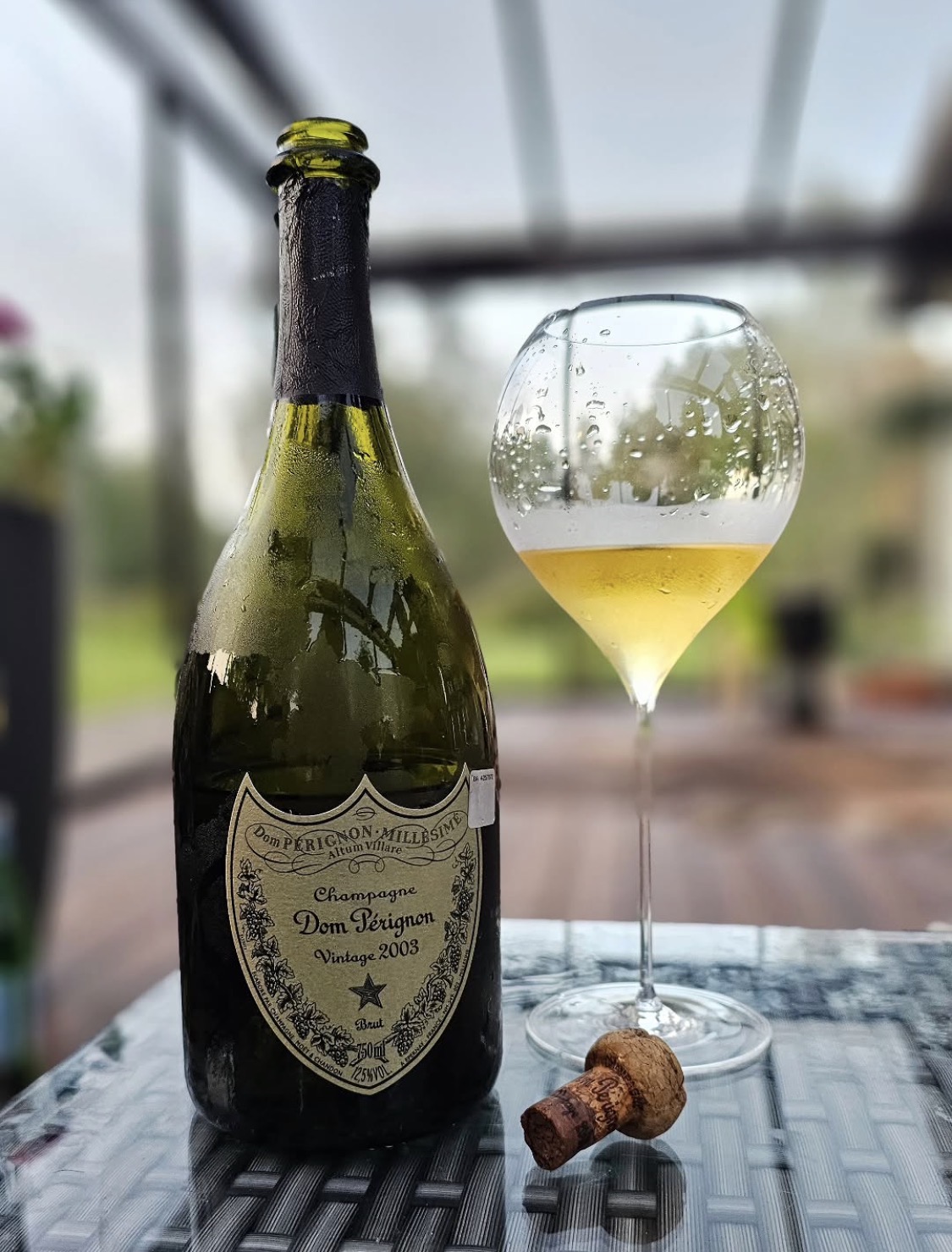
Dom Pérignon regularly sells for $200 to $350 a bottle, and that’s before you get to the extended-aged Plénitude releases, which push into the thousands. For a lot of people, that price raises an obvious question: why? What makes this particular bottle so much more expensive than most other Champagnes? The answer isn’t one thing. It’s a combination of production decisions that are genuinely unusual, even by the standards of fine Champagne — and each one adds cost, scarcity, and complexity to every bottle that leaves the cellar.
Table of contents
- What exactly is Dom Pérignon?
- Vintage only — not made every year
- The year they scrapped it all
- Minimum eight years in the cellar
- Plénitude — P2 and P3: aging beyond the release
- Grand Cru grapes only
- The Chef de Cave and the art of the blend
- LVMH, luxury, and what you are also paying for
- How much does Dom Pérignon cost?
- Is it worth it?
- Where to drink Dom Pérignon
What exactly is Dom Pérignon?
Dom Pérignon is a prestige cuvée — the top-tier Champagne — produced by Moët & Chandon, itself owned by LVMH, the world’s largest luxury goods group. The name honours Dom Pierre Pérignon, a Benedictine monk who lived in the Champagne region in the late 17th century and is credited — somewhat romantically — with refining and advancing the production of sparkling wine. Whether or not he invented Champagne (historians debate this), his name became inseparable from it.
The first commercial vintage of Dom Pérignon was 1921, released in 1936. Since then, it has occupied a different position in the Champagne world from most other bottles. It is not a blended, non-vintage wine designed for consistency. It is a single-vintage wine made only in years that meet an exceptionally high internal standard — and it carries more rules, more time, and more intentional scarcity than almost any other Champagne on the market.
Vintage only — not made every year
Most Champagne houses produce a non-vintage (NV) blend every year. By mixing wines from multiple harvests, they can maintain a consistent house style regardless of what the weather did to the grapes. It’s reliable, it’s scalable, and it means they always have something to sell.
Dom Pérignon has no non-vintage wine. Every bottle carries a year on the label, and that year has to justify its existence. The internal team at Dom Pérignon evaluates each harvest and decides whether the raw material is good enough. When they decide it isn’t, there is no Dom Pérignon from that year — full stop. That decision is taken seriously. Over the decades since 1921, Dom Pérignon has only declared around 40 vintages. That’s roughly one every two years, averaged across a century of winemaking.
Fewer bottles produced means higher prices for the ones that exist. Simple economics, applied at a level most wine producers wouldn’t choose.
The year they scrapped it all
The most striking recent illustration of this commitment came in 2023. By all accounts, the 2023 harvest in Champagne was large. Many other houses had perfectly serviceable grapes to work with. Dom Pérignon’s team looked at the vintage and decided it did not meet their standard. The entire 2023 vintage was scrapped. No Dom Pérignon 2023 will ever be released.
The scale of that decision is hard to overstate. Walking away from an entire year’s production — the labour, the raw materials, the potential revenue — is a statement about what the brand is willing to do to protect its standard. It is also, inevitably, a statement that pushes the price of every other vintage slightly higher. Less supply, same demand.
Minimum eight years in the cellar
Champagne’s legal minimum aging requirement for vintage wines is three years. Dom Pérignon ages for at least eight before it is released to the public — and in practice it often takes longer. The 2013 vintage, for example, wasn’t released until 2023, a full decade later.
That time in the cellar matters. Extended aging on the lees (the spent yeast left in the bottle after the second fermentation) develops the wine’s texture, complexity, and the characteristic autolytic notes — brioche, toasted almonds, cream — that Dom Pérignon is known for. You cannot shortcut it. Every extra year of aging is a bottle sitting in the cellar that hasn’t been sold, capital tied up, space occupied.
The cost of aging at that scale, in climate-controlled chalk cellars in the Champagne region, isn’t trivial — and it’s baked into every bottle price.
Plénitude — P2 and P3: aging beyond the release
The standard release — what Dom Pérignon calls P1, or the first Plénitude — is the entry point. Beyond it, the house holds back a portion of each exceptional vintage and continues to age it for years, sometimes decades longer, before releasing it again at a different stage of maturity.
P2 (the second Plénitude) is released around 15 years after the harvest — when the wine has passed through a second period of peak development that the team believes brings new dimensions to the glass. P2 typically sells for €500 to €800 or more per bottle, depending on the vintage. P3 (the third Plénitude) is held for around 25 years or more before release and sells at prices that comfortably exceed €1,000 a bottle — sometimes significantly.
These releases exist because Dom Pérignon’s winemaking philosophy treats time as an ingredient. The idea is that a great vintage has multiple peaks in its life — windows during which it expresses itself differently and, they argue, more completely. Whether you agree with that philosophy or not, the cost of holding wine in perfect conditions for a quarter of a century is reflected in the price.
Grand Cru grapes only
Champagne has a strict classification system for its vineyards. Grand Cru is the highest tier — only 17 villages in the entire region carry the designation. Dom Pérignon sources its grapes exclusively from Grand Cru vineyards, primarily in Aÿ and Hautvillers for Pinot Noir and in the Côte des Blancs for Chardonnay.
Grand Cru fruit costs more than Premier Cru or village-level grapes. The supply is inherently limited — there’s only so much Grand Cru land, and multiple prestigious houses compete for it. Dom Pérignon’s commitment to sourcing exclusively at this level is a cost decision that never changes, regardless of what that means for the budget.
The Chef de Cave and the art of the blend
Every Dom Pérignon vintage is shaped by the Chef de Cave — the head winemaker whose palate, vision, and decision-making determine what gets released and what doesn’t. The current Chef de Cave is Vincent Chaperon, who worked closely with his predecessor Richard Geoffroy (in the role for 28 years) before taking over in 2019.
This is not a mass-production mindset. The blend is assembled from hundreds of individual plots and parcels, each vinified separately, then evaluated and combined. The process is intensive, highly skilled, and genuinely irreplaceable by volume or automation. You’re paying for expertise accumulated over decades and expressed in a single assemblage decision that happens once per vintage.
LVMH, luxury, and what you are also paying for
LVMH acquired Moët Hennessy — and with it, Dom Pérignon — in 1987. Since then, the brand has been positioned not just as a great Champagne but as a luxury cultural object. Collaborations with artists like Jeff Koons, Lady Gaga, Lenny Kravitz, and Iris van Herpen have made the bottle itself a recognisable design object. The brand appears in films, at fashion weeks, and in the highest-profile events globally.
Some of what you’re paying for is that positioning. Dom Pérignon costs what it costs partly because it is one of the world’s most recognisable luxury brands, and that brand carries both genuine prestige and a premium that goes beyond the liquid in the bottle. Whether that additional premium is something you value is a personal question. What’s honest to say is that the wine itself — the production decisions, the aging, the sourcing — would justify a high price regardless. The brand simply takes it further.
How much does Dom Pérignon cost?
Prices vary by vintage, market, and retailer, but here’s a rough guide to what you can expect:
P1 (standard release): Most recent vintages — 2013, 2015 — sell for approximately $200 to $350 per bottle at retail. Older vintages in good condition can run higher depending on availability.
P2 (second Plénitude): Around $400 to $800 or more, depending on the vintage. The 2004 P2, for example, is considered one of the most compelling releases Dom Pérignon has made in recent years.
P3 (third Plénitude): Typically $1,000 and above, with exceptional vintages such as the 1990 P3 trading significantly higher at auction.
Rosé: The vintage rosé typically runs $20 to $50 more than the standard white at the P1 level — both a style choice and a production cost premium, as the rosé uses more Pinot Noir from the same Grand Cru sources.
Is it worth it?
That depends on what you mean by worth it. If you’re asking whether Dom Pérignon is technically better than every other Champagne at its price point — that’s genuinely debatable. There are grower Champagnes, smaller houses, and even other prestige cuvées that wine critics frequently score as highly or higher for the money.
If you’re asking whether the production behind it is genuinely exceptional — then yes, without much argument. The vintage-only policy, the extended aging, the Grand Cru sourcing, the Plénitude philosophy: these are not marketing claims. They are decisions that cost money, limit supply, and result in a wine that is legitimately rare and complex.
Dom Pérignon at its best — a well-aged vintage, served properly in a good glass, with time to open — is a serious, genuinely beautiful wine. It is also a cultural object that many people find worth paying for on those grounds alone. Neither answer is wrong. The honest one is probably both.
Where to drink Dom Pérignon
If you want to try Dom Pérignon without committing to a full bottle, the best approach is a fine dining restaurant or a specialist Champagne bar with a serious wine list. These venues often offer Dom Pérignon by the glass or by the bottle from their cellar — and having it poured properly, by someone who stores it correctly, makes a real difference to the experience.
We’ve mapped some of the best spots around the world that carry Dom Pérignon on their list. Whether you’re in London, Paris, New York, Tokyo, or somewhere in between, the Champagne Hunters map will help you find a venue worth the occasion.
If your bar or restaurant carries Dom Pérignon by the glass or bottle, add your listing to our map and let the right guests find you.