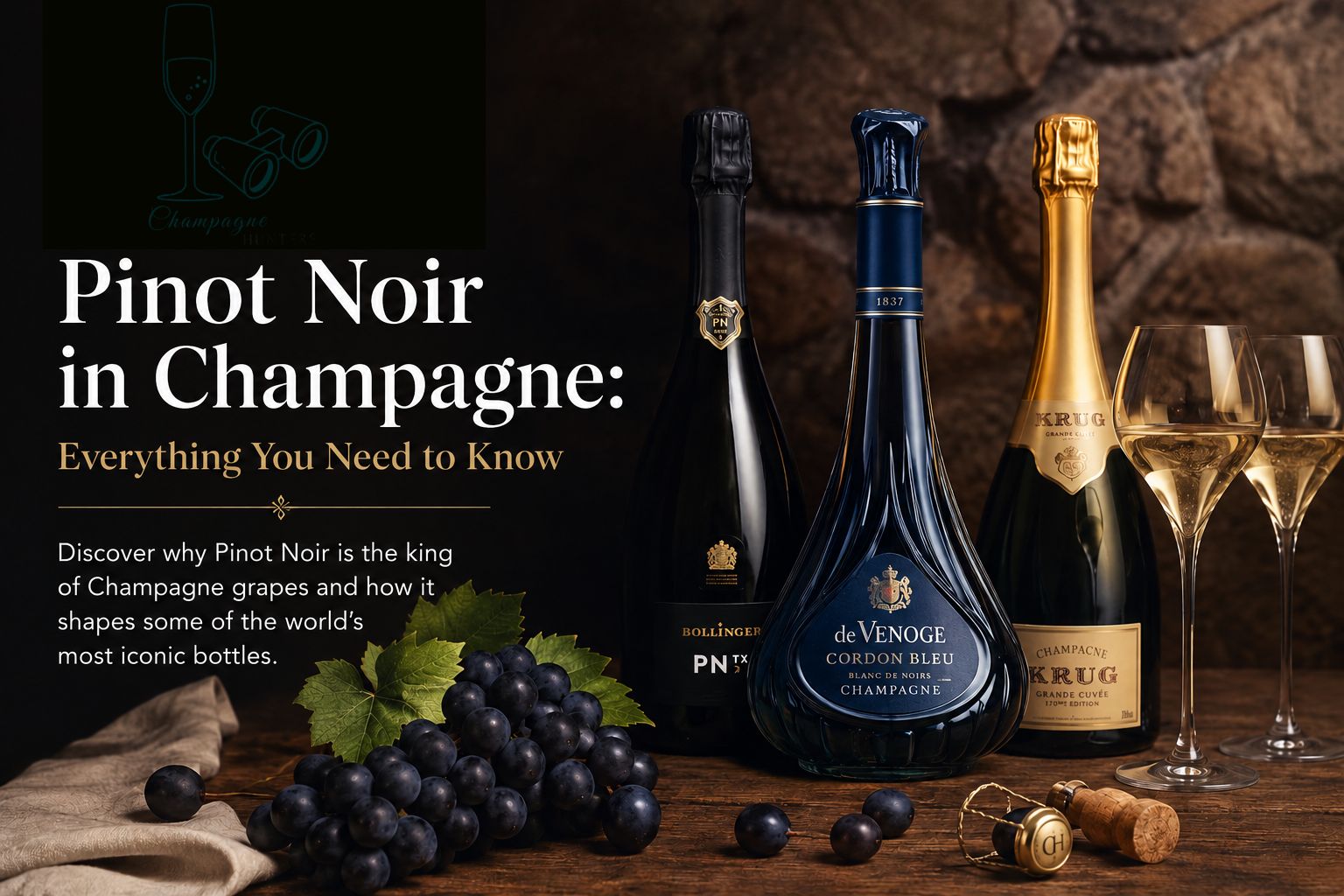
When people think about Champagne, they often imagine elegance, freshness and celebration. But behind every great bottle is the grape that shapes its personality – and in many of the world’s most iconic Champagnes, that grape is Pinot Noir.
Pinot Noir is the most widely planted grape variety in Champagne, covering around 38% of the region’s vineyards. It thrives especially well in the famous areas of the Montagne de Reims and Côte des Bar, where cooler climates and chalky soils help create wines with depth, structure and remarkable character.
Why Pinot Noir Matters in Champagne
Pinot Noir gives Champagne many of the qualities wine lovers appreciate most:
- Rich fruit character
- Structure and body
- Power and depth
- Red berry aromas
- Long aging potential
- A more vinous and complex style
Compared to Chardonnay, which brings freshness and citrus notes, Pinot Noir creates a fuller and more intense Champagne experience. It is often the grape behind more gastronomic styles of Champagne that pair beautifully with food.
The Origins of Pinot Noir
The name “Pinot Noir” comes from the pinecone-like shape of its grape clusters (“pinot” meaning pine) and the dark color of the berries (“noir” meaning black). It is considered one of the oldest grape varieties in the world, with origins dating back nearly 2,000 years.
Despite having dark skins, Pinot Noir is commonly used to produce white Champagne. This happens because the juice inside the grape is naturally clear, and careful pressing avoids too much skin contact.
Blanc de Noirs, What Does It Mean?
If you see “Blanc de Noirs” on a Champagne label, it means “white from black grapes.” These Champagnes are made exclusively from dark-skinned grapes such as Pinot Noir and Pinot Meunier.
Blanc de Noirs Champagnes are typically:
- Richer and more powerful
- More textured and creamy
- Excellent with food
- Ideal for people who enjoy deeper Champagne styles
One excellent example is the elegant and expressive De Venoge Cordon Bleu Blanc de Noirs Champagne, which showcases the richness and character Pinot Noir can bring to Champagne.
You can discover it in our online shop
Pinot Noir Regions in Champagne
Montagne de Reims
This historic area is famous for producing structured and elegant Pinot Noir wines with excellent aging potential. Villages like Verzenay, Verzy and Bouzy are especially respected among Champagne enthusiasts.
Côte des Bar
Located in the southern part of Champagne, Côte des Bar produces riper and fruitier Pinot Noir expressions. Many modern grower Champagnes from this region have become highly sought after for their intensity and value.
Food Pairing With Pinot Noir Champagne
Pinot Noir-based Champagne is incredibly versatile at the dining table. Its structure and richness allow it to pair with foods that lighter Champagnes sometimes struggle with.
Great pairings include:
- Grilled salmon
- Tuna tartare
- Duck dishes
- Truffle pasta
- Aged cheeses
- Mushroom risotto
- Charcuterie
Blanc de Noirs Champagnes are also excellent choices for autumn and winter dinners thanks to their fuller body.
Popular Pinot Noir Champagnes to Explore
If you want to better understand the influence of Pinot Noir in Champagne, these styles are worth exploring:
- Blanc de Noirs Champagne
- Vintage Champagne
- Rosé Champagne
- Oak-aged Champagne
- Grower Champagne from Côte des Bar
Each style reveals different dimensions of Pinot Noir, from bright red berry freshness to deep, wine-like complexity.
Final Thoughts
Pinot Noir is one of the defining grapes of Champagne and a key reason why many Champagnes feel so luxurious, layered and memorable. Whether blended with Chardonnay or featured alone in a Blanc de Noirs, Pinot Noir brings structure, richness and personality to every glass.
For wine lovers looking for a deeper and more gastronomic Champagne experience, Pinot Noir-based Champagnes are an excellent place to start.
Explore more Champagne selections and discover unique bottles at our shop