When you think of champagne, your mind probably wanders to Paris, London or New York. But here’s a fact that surprises many wine lovers: Japan is the third-largest export market for champagne in the world, behind only the United States and the United Kingdom. Every year, well over twelve million bottles make the long journey from the chalky cellars of Reims and Épernay to Tokyo, Osaka and Kyoto.
So what is it about champagne that has captured the Japanese heart? Let’s pop the cork on this story.
A culture built on precision meets a wine built on precision
Champagne is arguably the most meticulous wine in the world. Hand-picked grapes, strictly regulated yields, years of patient ageing on the lees, the careful ritual of riddling and disgorgement – every bottle is the result of obsessive attention to detail.
If that sounds familiar, it should. It’s the same philosophy you find in a Japanese sushi master who spends a decade perfecting rice, or a tea ceremony where every gesture has meaning. The Japanese concept of kodawari — the relentless, almost stubborn pursuit of perfection in one’s craft — maps almost perfectly onto how champagne is made. Japanese drinkers don’t just enjoy champagne; they respect it.
Champagne and Japanese food: a match made in heaven
Ask any sommelier what to drink with sushi, sashimi or tempura, and champagne will come up again and again. There’s a good reason for it.
Japanese cuisine is delicate, umami-rich and rarely heavy. Champagne’s bright acidity, fine bubbles and subtle autolytic notes (think brioche, toasted nuts, a whisper of the sea) complement raw fish and dashi-based dishes in a way few red wines ever could. A blanc de blancs alongside white fish sashimi, or a richer vintage champagne with grilled eel — these pairings feel less like a compromise and more like a discovery.
It’s no coincidence that many of Tokyo’s Michelin-starred restaurants (and Tokyo has more of them than any other city on Earth) pour champagne by the glass as naturally as they serve tea.
The champagne bar phenomenon
Here’s where Japan truly stands apart: the sheer number of dedicated champagne bars.
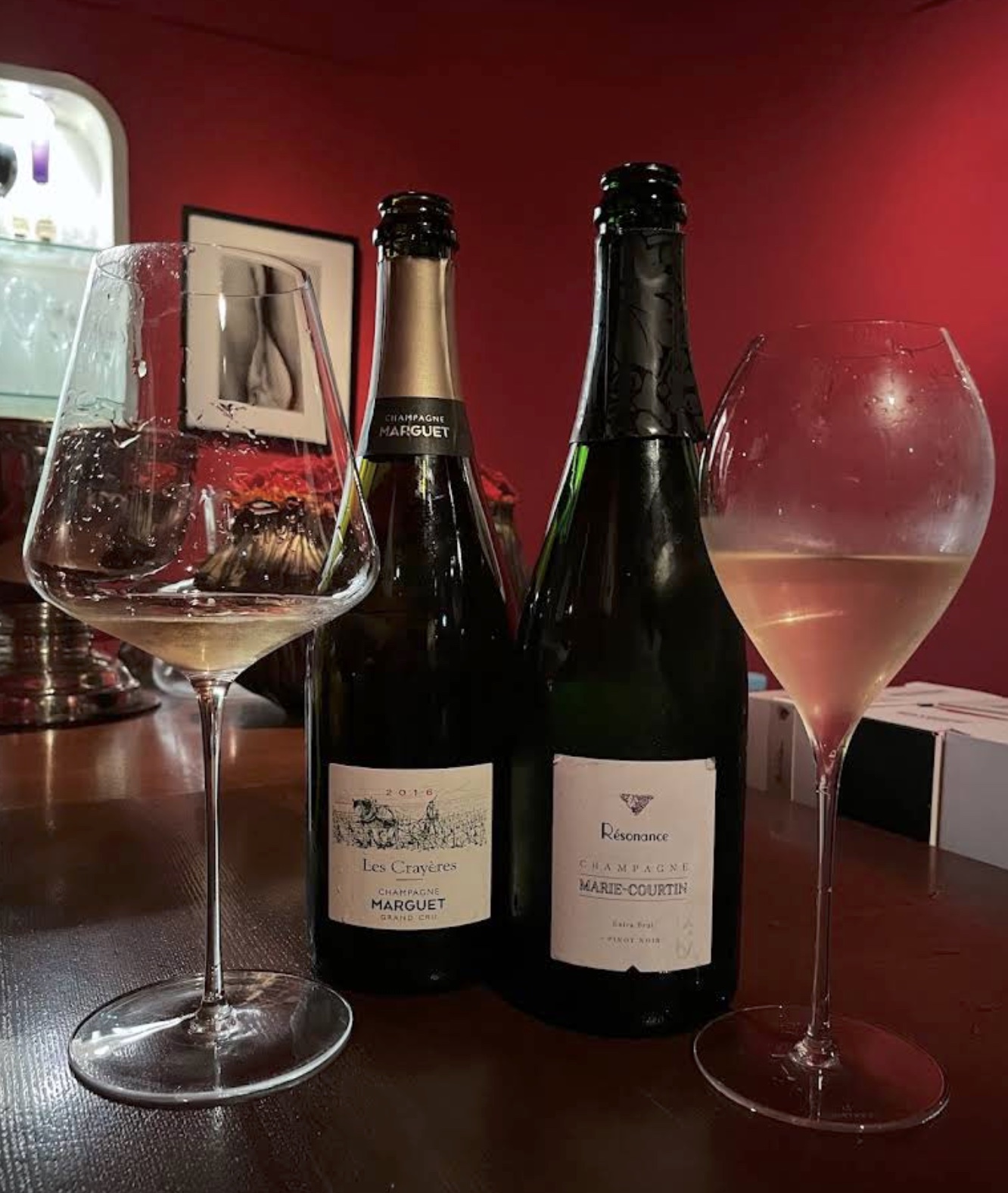
Walk through Ginza, Roppongi or Nishi-Azabu in Tokyo, and you’ll find entire bars devoted to nothing but champagne — intimate, often seating just eight to twelve guests, with lists that would make a Reims négociant blush. Rare grower champagnes, old vintages, magnums of prestige cuvées — many of these bars stock bottles you’d struggle to find in France itself.
The Japanese bar culture of small, hyper-specialised establishments (you’ll also find bars dedicated solely to whisky, gin or even ice) has given champagne a natural home. In these tiny temples of bubbles, the bartender knows every bottle’s story, the glassware is impeccable, and drinking champagne becomes what it always should be: an experience, not just a drink.
Osaka, Kyoto, Fukuoka and Nagoya all have their own thriving champagne bar scenes too. For a travelling champagne lover, Japan might honestly be the best country in the world for bar-hopping with bubbles.
Gifting, celebration and a touch of luxury
Japan has a deeply rooted gift-giving culture, and champagne fits it beautifully. A beautifully presented bottle of champagne carries exactly the right message: refined, celebratory, a little luxurious, never vulgar. During the ochugen and oseibo gifting seasons, champagne is a popular choice for expressing gratitude to colleagues, clients and family.
Add to that Japan’s long-standing appreciation for French luxury in general — from fashion houses to patisserie — and champagne slots naturally into the picture as the drinkable embodiment of French elegance.
Grower champagne’s quiet superfans
One more thing that makes the Japanese market special: it embraced grower champagne (récoltant-manipulant) early and enthusiastically. While much of the world was still focused on the big houses, Japanese importers and sommeliers were hunting down small, terroir-driven producers from villages most people had never heard of.
Today, Japanese champagne lists are famous for their depth in grower bottles — which tells you everything about the market’s maturity. This isn’t champagne bought for the label. It’s champagne bought for what’s in the glass.
The takeaway
Japan loves champagne for the same reasons we do at Champagne Hunters: the craftsmanship, the food-friendliness, the sense of occasion, and the endless rabbit hole of producers, villages and vintages to explore.
So if your travels ever take you to Tokyo, skip the hotel bar one evening. Find a tiny eight-seat champagne bar down a quiet Ginza side street, let the bartender choose something you’ve never heard of, and raise a glass. Kanpai!