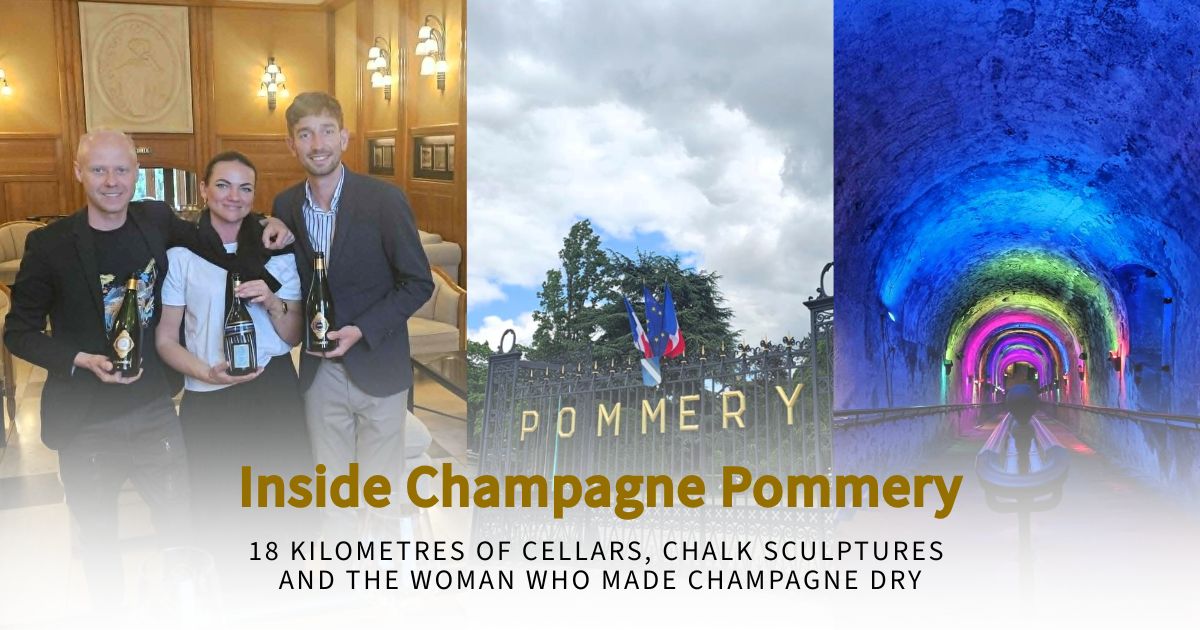
Some Champagne Houses take you underground to show you where their bottles age. Pommery takes you into a piece of Reims history that happens to be filled with Champagne.
We visited Domaine Pommery for a private tour led by Pommery winemaker Baptiste Chazeaud, who took us far beyond a standard cellar visit. We walked through the Gallo-Roman crayères beneath Reims, saw sculptures carved directly into the chalk, explored the history of the House and finished with a tasting of three Pommery Champagnes.
What makes Pommery particularly interesting is that so much of what you see underground goes back to one person: Madame Louise Pommery. She inherited a Champagne business in 1858 and turned it into one of the most recognisable Houses in Reims, while also helping change the way the world drinks Champagne.
The woman who changed Champagne
When Louis Pommery died suddenly in 1858, his widow Louise Pommery was only 39 years old. She took over Pommery & Greno and began building a House that would look very different from the one her husband had left behind. Her most important contribution came in 1874, when, at a time when Champagne was generally much sweeter than the wine we drink today, she created Pommery Nature, a dry Champagne that became the first commercially successful Brut Champagne. Pommery still considers 1874 the defining moment in the history of the House.
That detail is worth knowing before entering the cellars because the whole Pommery estate starts to make more sense once you understand Madame Pommery’s personality. She was willing to take an established product and question what people expected from it, and she applied the same thinking to the estate itself.
A 19th-century building project on an enormous scale
In July 1868, Madame Pommery began one of the most ambitious construction projects Reims had seen. Instead of building conventional underground cellars, she decided to transform the ancient chalk quarries beneath Saint-Nicaise Hill into Champagne ageing cellars. French and Belgian miners worked around 30 metres below the surface, creating a network of approximately 18 kilometres of galleries. The galleries connected the old Gallo-Roman crayères and turned them into what Pommery itself describes as a giant subterranean town. The monumental staircase of 116 steps provides the direct connection between this underground world and the estate above.
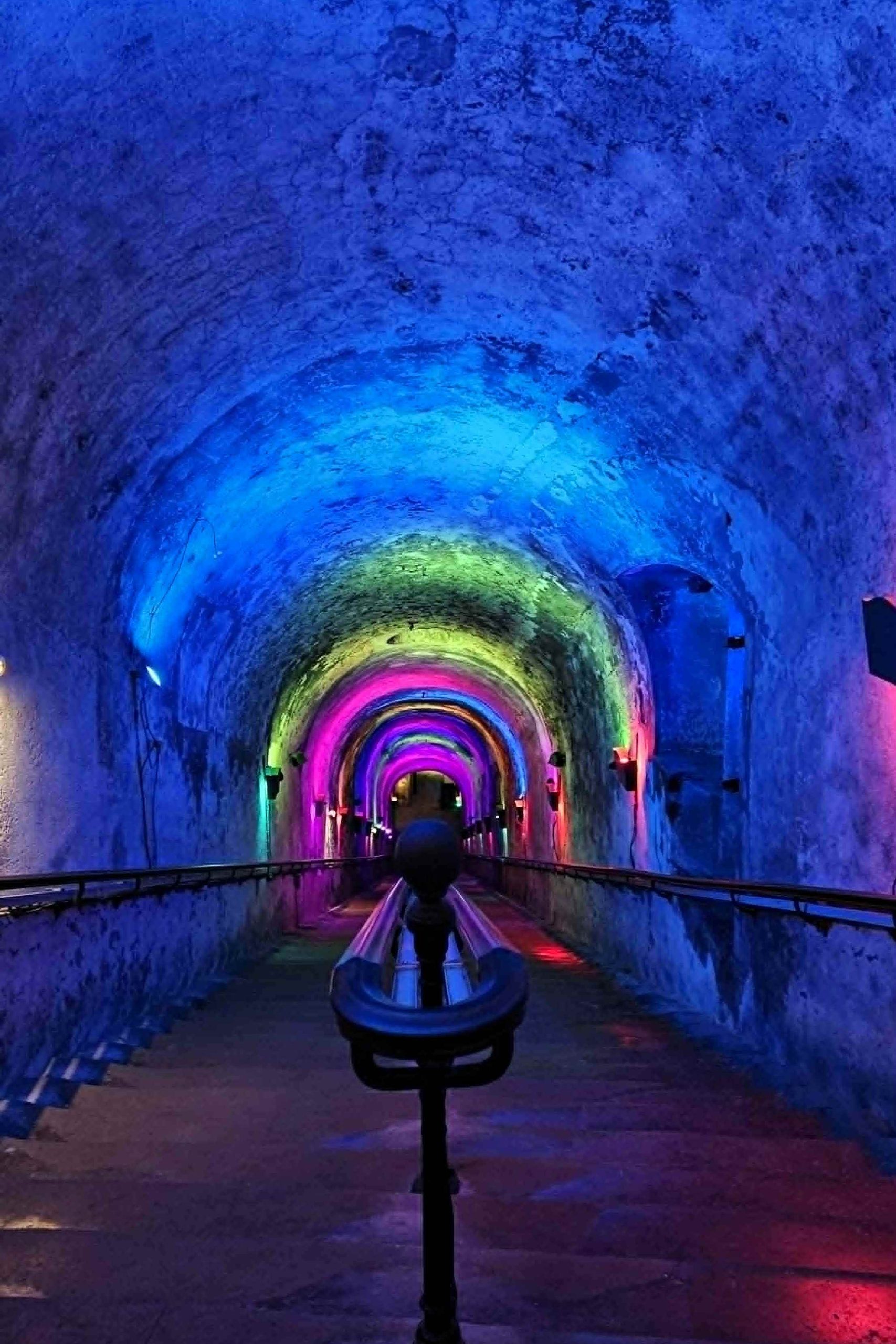
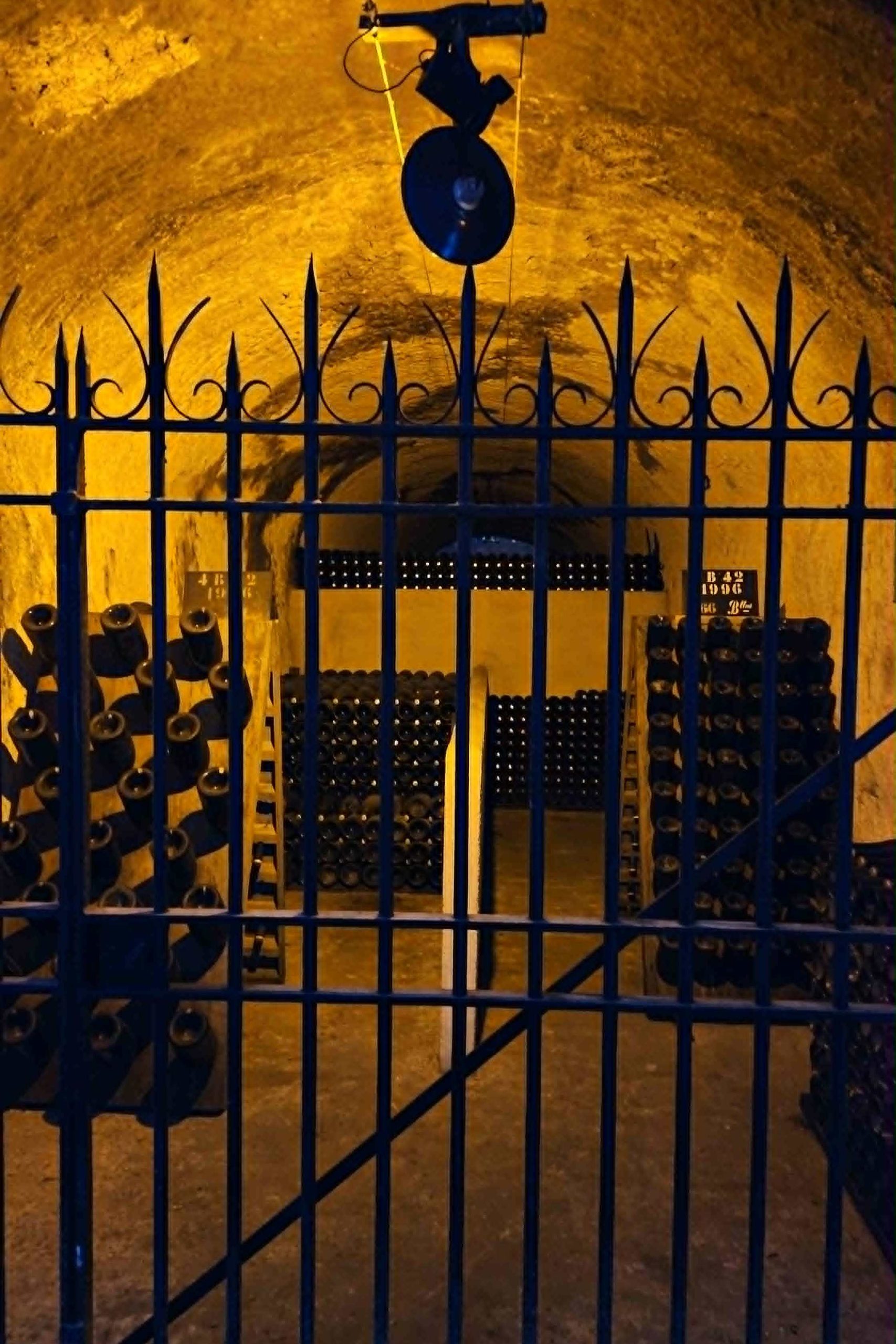
Once you descend, Reims disappears. The temperature in the cellars stays around 10°C throughout the year, creating the cool, stable environment Champagne needs for ageing. The walls are raw chalk, the galleries are vaulted, and bottles sit in long rows in the darkness, some of them ordinary production stock and others carrying dates that make you stop and look twice.
Then you notice the sculptures.
Champagne cellars with sculptures carved into the walls
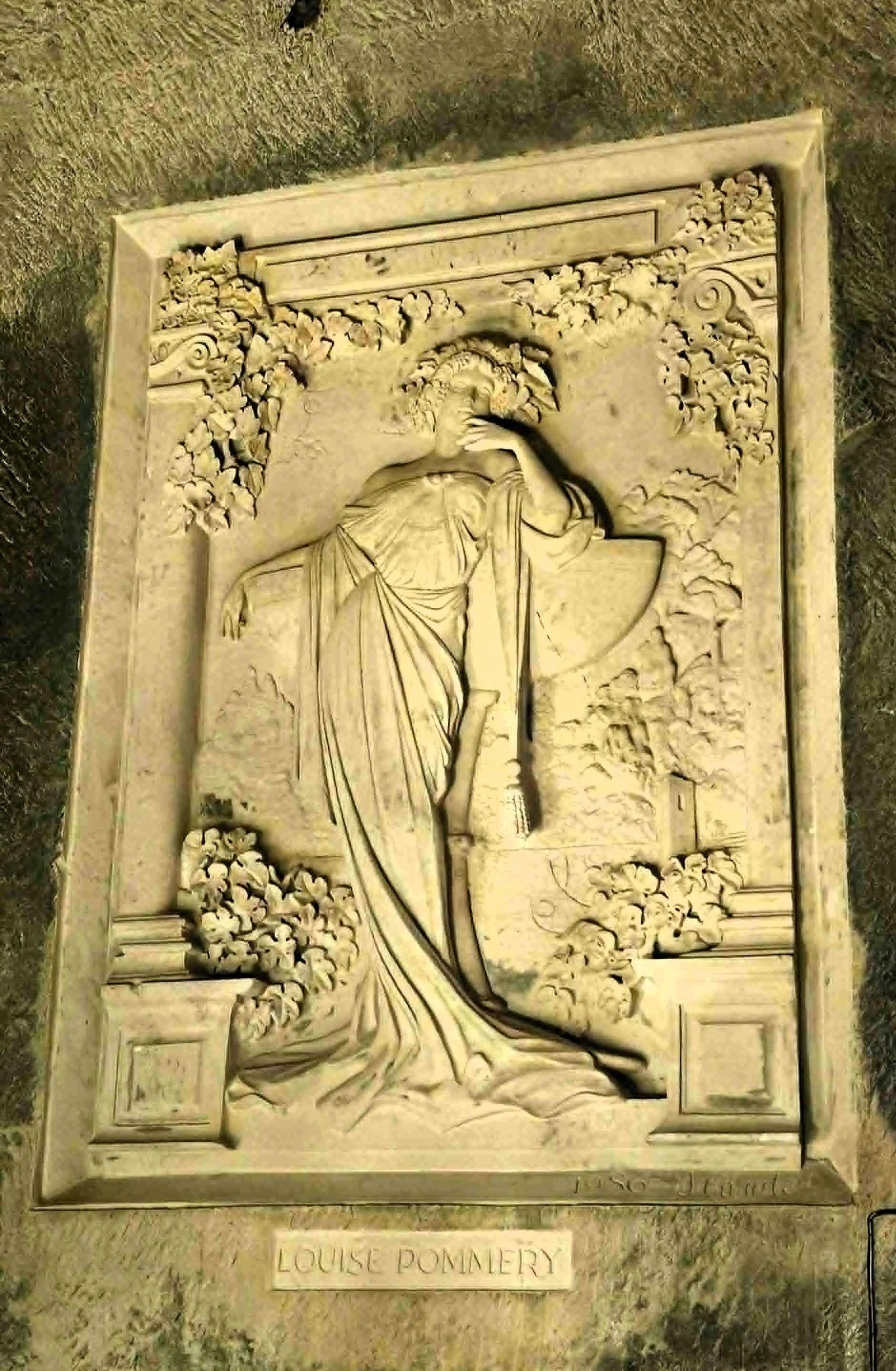
This is where Pommery stops feeling like a conventional Champagne House visit. Madame Pommery commissioned sculptor Gustave-André Navlet to create monumental works directly in the chalk of the crayères, making the sculptures part of the architecture rather than something displayed separately from it.
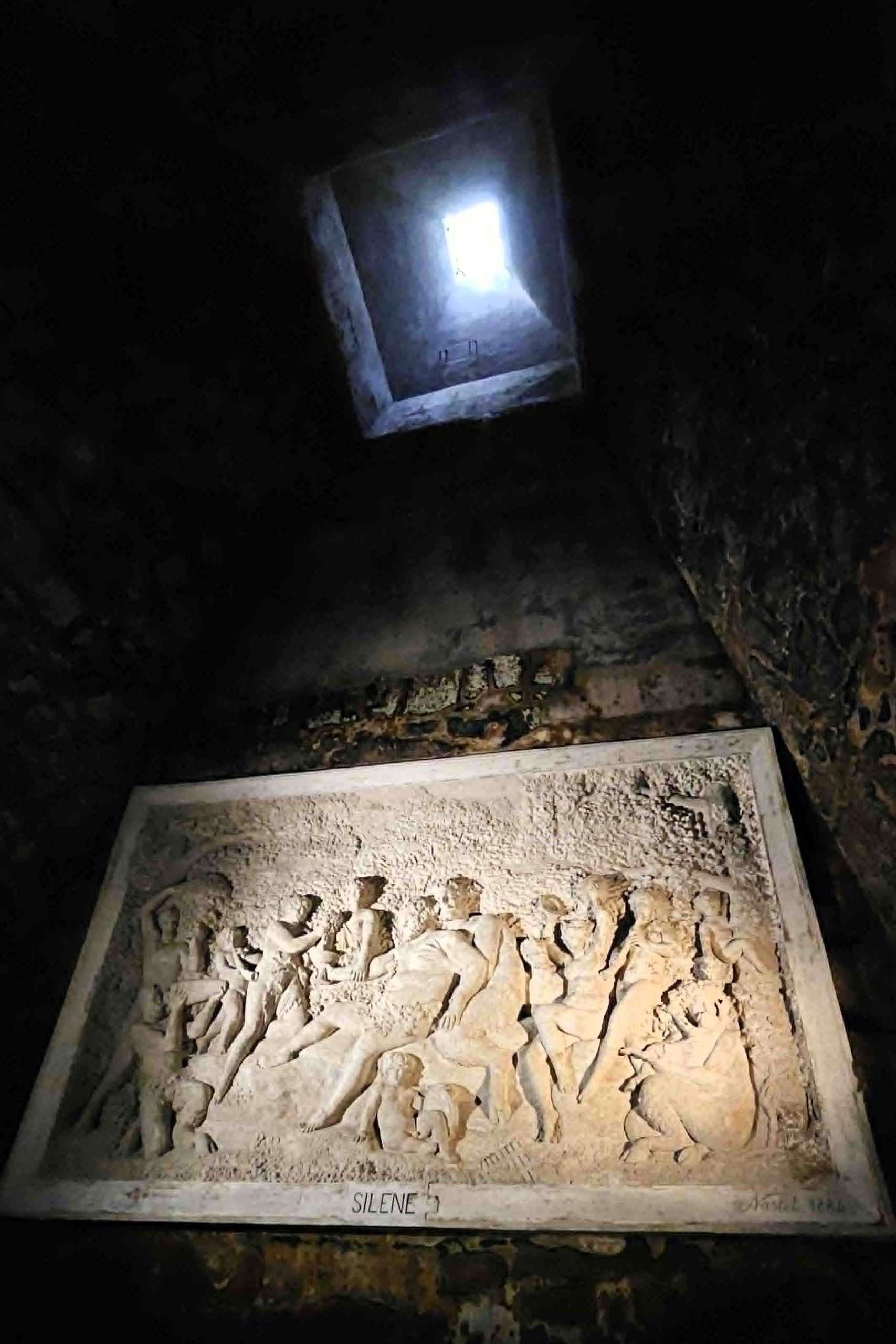
One of the most striking works is Silène et sa cour de ménades en folie, carved in 1884. The relief is enormous, and seeing it in the dim underground space is very different from looking at a photograph of it. The chalk wall itself becomes the artwork.
The decision to put art into the cellars also fits with Madame Pommery’s wider relationship with culture. She was a major patron of the arts and supported artists and cultural institutions in Reims. Her collection of more than 850 ceramics eventually went to the Musée des Beaux-Arts in Reims, and she famously bought Jean-François Millet’s Des Glaneuses and donated it to the Louvre. At Pommery, art was never treated as something completely separate from the business. It became part of the identity of the estate.
That tradition continues today through Experience Pommery, the contemporary art programme installed in the Gallo-Roman crayères. More than 300 artists have exhibited there over the years, so you can walk through a gallery excavated centuries ago, pass rows of ageing Champagne and then find yourself standing in front of a contemporary artwork.
There are not many wine cellars where that combination feels quite so natural.
The architecture above ground is part of the story too
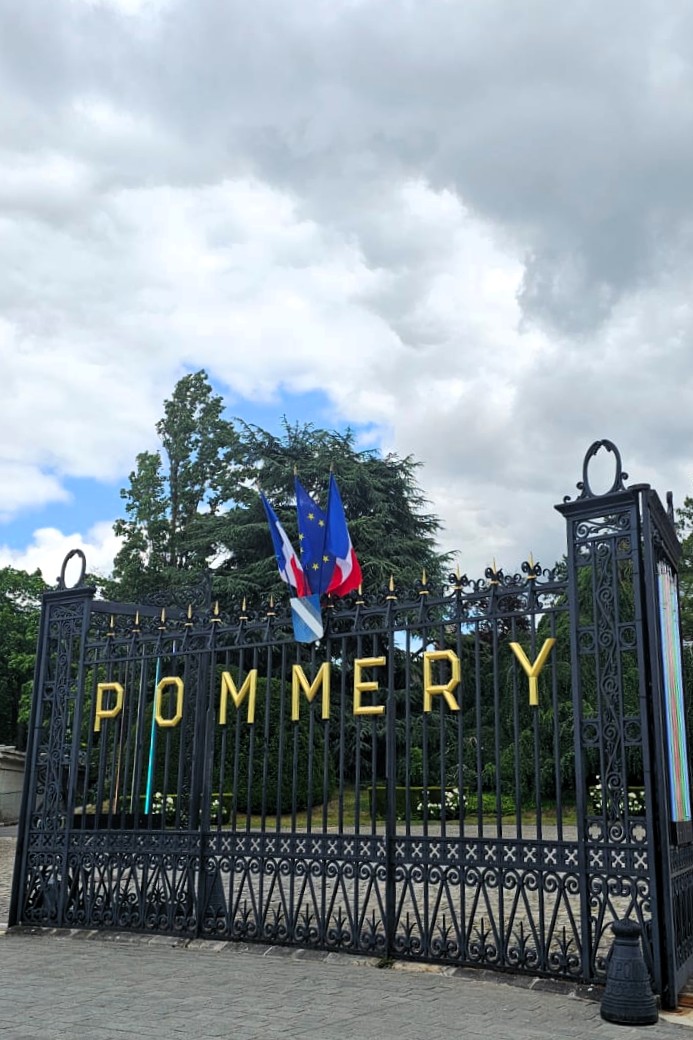
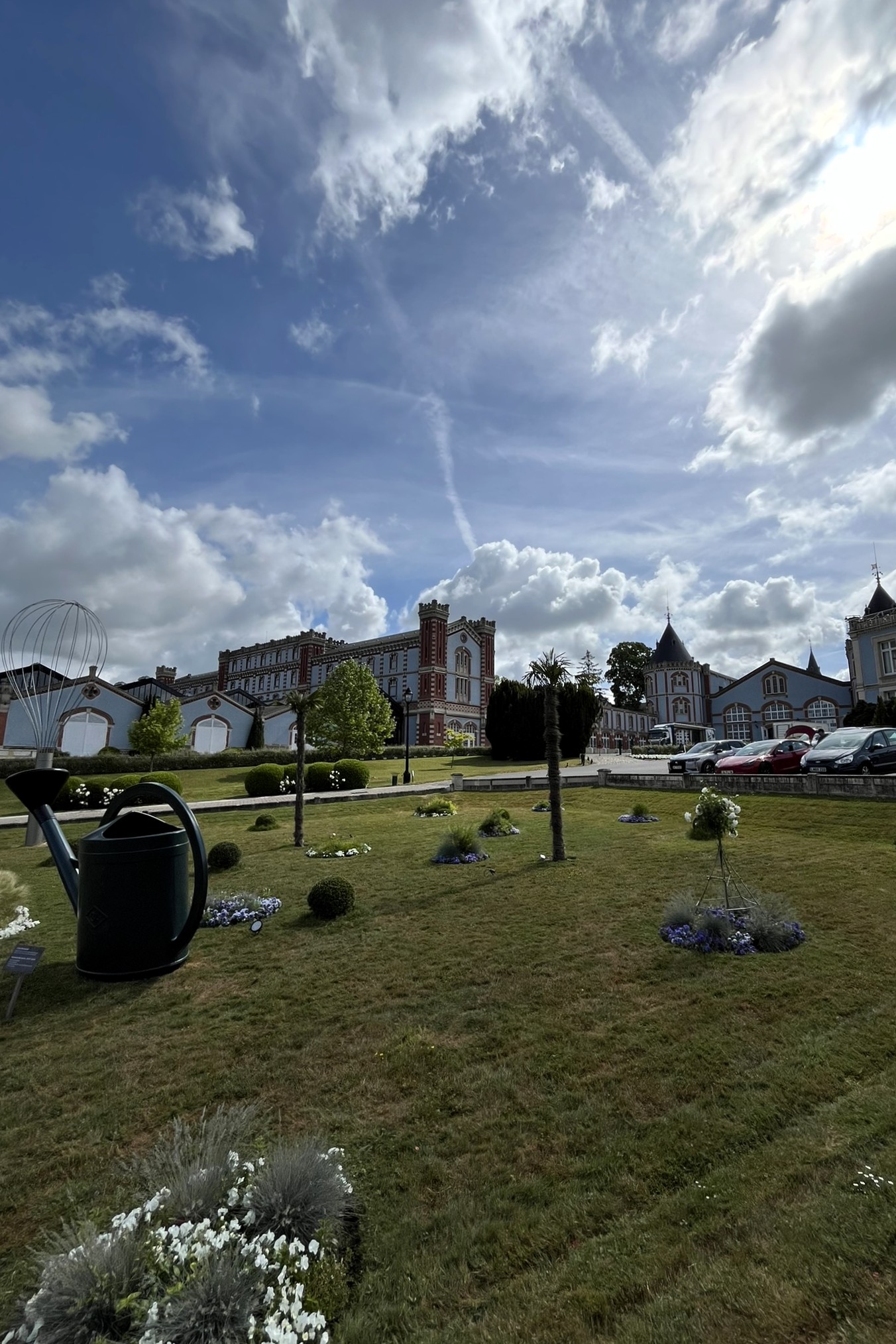
The Pommery experience starts before you reach the cellar. The Domaine’s striking buildings were designed in an Elizabethan-inspired style, reflecting Madame Pommery’s close relationship with Britain and the importance of the British market to the House. Red brick, towers and elaborate architectural details make the estate look more like an English country house than a traditional Champagne property.
That was deliberate. Madame Pommery wanted the estate to make an impression, and the architecture became part of how the House presented itself to the world. The same approach appears underground: the crayères were not simply used because they were available. They were transformed into a place where Champagne, architecture, history and art could coexist.
The whole Saint-Nicaise Hill in Reims became part of the Champagne Hillsides, Houses and Cellars UNESCO World Heritage property in 2015. UNESCO recognises the area as an important example of how Champagne production shaped both the landscape and the development of the city.
A cellar that connects Champagne to the world
One detail we particularly liked was the way the underground galleries reflect Pommery’s international ambitions. As the House expanded into international markets, galleries were associated with major cities. It is a small detail, but it reflects something that was already true in Madame Pommery’s time: Pommery was never thinking only about Reims. The House developed strong connections with Britain and other export markets, and the architecture itself was influenced by this international outlook.
One of the best examples is the enormous Pommery foudre decorated by Émile Gallé. The barrel holds 75,000 litres, roughly the equivalent of 100,000 bottles of Champagne. Gallé decorated it in 1903 with a composition celebrating the relationship between France and the United States, including references to the Statue of Liberty and Reims. The enormous vessel was subsequently transported to the United States for the 1904 World’s Fair in St. Louis.
It is exactly the sort of object that makes the history of Pommery tangible. This was not a small regional wine business trying to find its place. By the beginning of the 20th century, Pommery understood the value of Champagne as an international luxury product, and the value of telling a story around it.
Seeing the cellars with a winemaker
Our visit was different from simply following an audio guide through the crayères because Baptiste Chazeaud was with us. Having a winemaker guide you through a Champagne House changes the questions you ask. Instead of only asking how old a cellar is or how many bottles are stored there, you can ask why particular wines are made the way they are, what the cellar contributes to ageing, how different terroirs are handled and what the House is trying to achieve with each cuvée.
Baptiste gave us that perspective while we moved through the cellars and the history of Pommery. That made the bottles around us feel less like objects in a museum and more like the final stage of a much longer process. You could see the environment in which the wines spend years ageing, then sit down and taste them with someone who is involved in making them. For us, that connection between the cellar and the glass was one of the strongest parts of the visit.
Tasting three Pommery Champagnes
After exploring the cellars, we sat down to taste three Pommery Champagnes: Cuvée Louise 2006, Apanage Brut and Apanage Blanc de Blancs.
We started with Apanage Brut, a Champagne that gives a good sense of Pommery’s house style. It felt fresh and approachable, with the kind of balance that makes it easy to enjoy on its own but also leaves plenty of room for food. It was a good introduction before moving on to the more distinctive wine that followed.
Next came Apanage Blanc de Blancs, made from Chardonnay. Compared with the Brut, it showed a more focused and elegant side of Pommery, with the freshness and mineral character you would expect from a Blanc de Blancs. Tasting the two side by side made the difference between them particularly easy to notice.
The most memorable wine of the tasting was Cuvée Louise 2006, Pommery’s prestige cuvée named after Louise Pommery herself. Made from Grand Cru grapes from Avize, Cramant and Aÿ, it had a completely different presence from the two Apanage wines. The 2006 vintage brought more depth and complexity, and this was the Champagne we found ourselves spending the most time with.
Tasting Cuvée Louise after walking through the cellars also made the story behind the wine feel much more real. We had just spent time learning about the woman who transformed Pommery and helped establish the dry Champagne style, and now we were drinking a cuvée carrying her name.

The 1874 story is still being written
Pommery has not simply turned Madame Pommery’s history into a museum piece. The House continues to use 1874 as a reference point in its current wines. The Apanage Brut 1874, for example, was created around the legacy of the original Brut and combines 17 crus, with a predominance of Chardonnay and Pinot Noir. The current wine is aged for 48 months in the Saint-Nicaise crayères and uses a relatively low dosage.
That makes the 1874 name more than a historical date. It connects the wines being made today with the decision Madame Pommery made more than 150 years ago to challenge the prevailing taste for sweeter Champagne.
Why this visit stayed with us
There are plenty of Champagne cellars where the impressive part is the scale. Pommery has the scale, but the story is more layered.
You start above ground with an unusual Elizabethan-style estate, then descend into ancient chalk quarries where 19th-century sculptures share the space with contemporary art and thousands upon thousands of bottles ageing in the same cool underground environment. Running through all of it is Madame Pommery: her decision to create a dry Champagne in 1874, her decision to build the cellars, her interest in art and architecture, and her understanding that Champagne had to be presented as an experience as well as a wine.
That is what makes Pommery so interesting to visit. The cellar is not just where the Champagne ages. It is part of the reason the House has such a strong identity.
Visiting Pommery in Reims
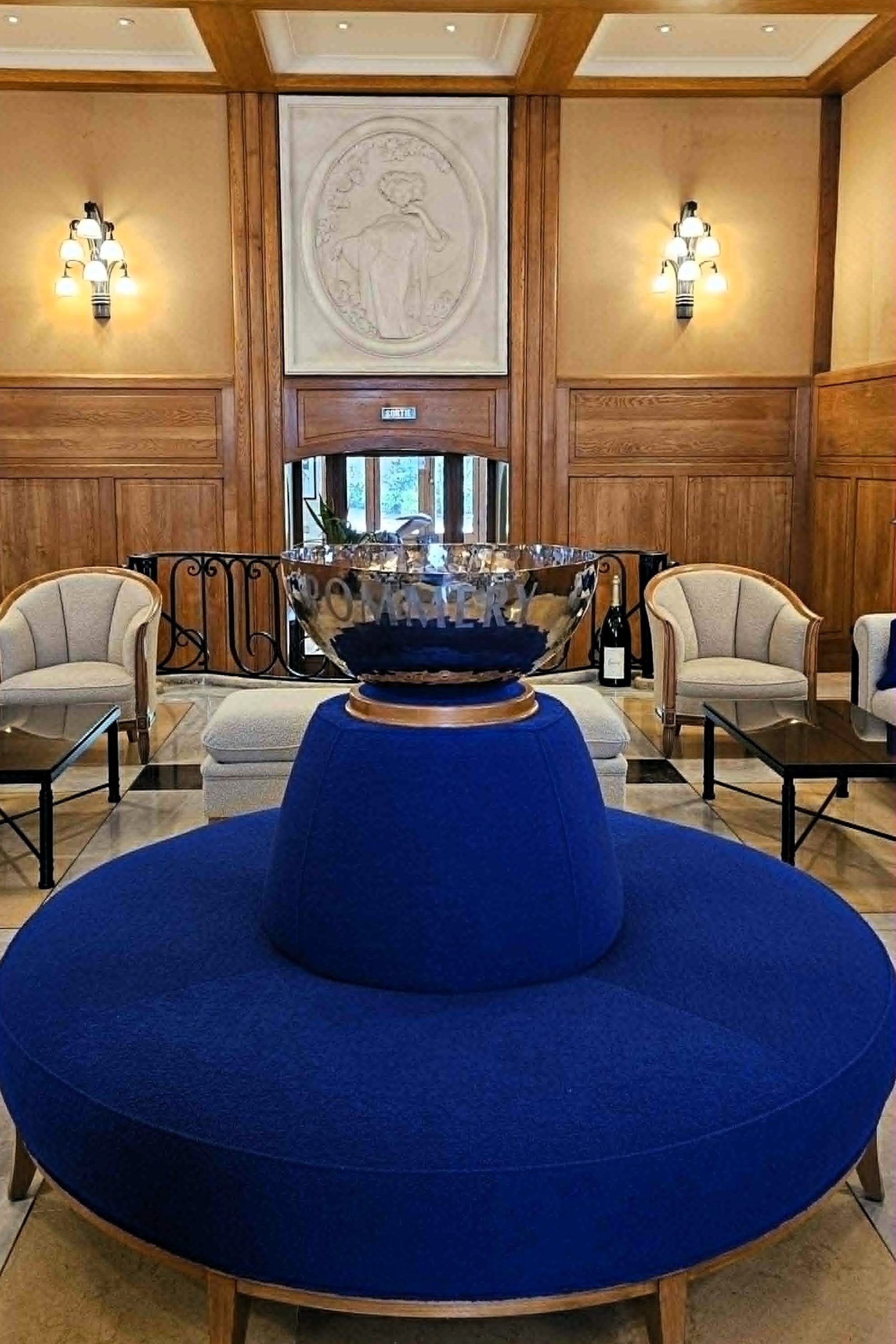
Pommery is at 5 Place du Général Gouraud, 51100 Reims, around 20 minutes from Reims central station by bus. The Domaine has complimentary parking in the courtyard. The cellars remain around 10°C year-round, so even in summer you will want another layer.
The current public programme includes several different experiences. The standard Pommery cellar visit takes around 45 minutes and includes the Gallo-Roman crayères, the Champagne-making story and Experience Pommery, with a tasting of Brut Royal. The guided version is currently listed from €36 per person.
For a more substantial visit, Pommery currently offers the guided “Genius of Madame Pommery” experience, which lasts two hours and includes two tastings and the Pommery museum, currently listed at €48 per person. There is also a “vine to glass” experience that combines the Clos Pompadour vineyard, winery and crayères with two tastings.
Our experience was different again: a private visit with Baptiste Chazeaud, with the cellar, history and wines discussed directly with someone from the winemaking team. A standard visit can show you where Pommery makes and ages its Champagne, while a private visit with someone from the House gives you a much deeper understanding of why the wines are made the way they are.
For Champagne lovers, that difference matters. It turns a cellar visit into a chance to connect the place, the people and the wines.
Pommery Domaine
5 Place du Général Gouraud, 51100 Reims
Official Pommery visitor information and bookings
Our take
Pommery is one of those Champagne Houses where you should leave some time in your schedule. Not simply because the cellar is big, but because there is so much to look at and understand once you are underground. The crayères, Navlet’s sculptures, the old bottles, the architecture and the story of Madame Pommery all become part of the experience.
Our private visit with Baptiste gave us something a standard tour cannot quite replicate: the chance to connect all those pieces directly to the wines in the glass. And that is what we look for when we visit Champagne Houses – not just a beautiful cellar or a tasting, but access to the people, stories and details that make a Champagne House worth remembering.
Visiting Champagne Pommery: Frequently Asked Questions
Yes. Pommery offers both guided and self-guided cellar visits. The self-guided experience uses a downloadable digital/audio tour, so you can explore the cellars and chalk pits at your own pace.
It is best to book ahead, especially during busy periods. Pommery offers several different experiences, and availability can vary depending on the date and type of visit you choose. Tickets can be booked through the official Pommery ticketing system.
Prices depend on the experience. Current options include self-guided cellar visits from around €30 per adult and guided cellar tours from around €36. More extensive experiences, such as the gastronomic visit, cost more.
The standard cellar visit takes around 45 minutes to 1 hour, depending on whether you choose the self-guided or guided option. Longer experiences are available, including a two-hour “Vine to Glass” tour and a three-hour gastronomic experience.
Yes. Much of the experience is about the history of the Maison, the architecture, the Gallo-Roman chalk pits, Champagne production and contemporary art. The standard visits do include a tasting, but the cellars themselves are a major part of the experience.
The cellars stay at around 10°C (50°F) throughout the year, so even if you’re visiting Reims on a warm summer day, bring a jacket or another warm layer.
The Domaine Pommery is at 5 Place du Général Gouraud in Reims. It is around 20 minutes from the central station by bus, with the Pommery stop nearby. Complimentary parking is also available in the estate’s courtyard.
Yes, but unaccompanied minors are not allowed into the cellars. The current ticketing information also lists free admission for children under 10 on several experiences, while reduced tickets are available for older children.
No. Pets are not allowed in the Pommery cellars or inside Villa Demoiselle. If you’re visiting with a dog, it’s worth making arrangements for your pet before your visit.
Villa Demoiselle is a beautifully restored Art Nouveau and Art Deco residence located just across from the Pommery estate in Reims. It is now part of the wider Pommery experience and showcases an impressive collection of early 20th-century decorative arts, with works by artists including Majorelle, Gallé and Daum. You can visit the villa separately or choose a combined experience that takes you through the Pommery cellars and Villa Demoiselle, making it a great option if you want to experience both the Champagne-making heritage and the artistic side of the estate.